Design and Analysis of an Agricultural Locust Control Quadcopter UAV
This project focused on designing and analyzing an autonomous quadcopter UAV for agricultural locust control. Through detailed CAD modeling, FEA, CFD, and topology optimization, a robust and efficient design capable of spraying a half-acre area was developed.
Project Overview
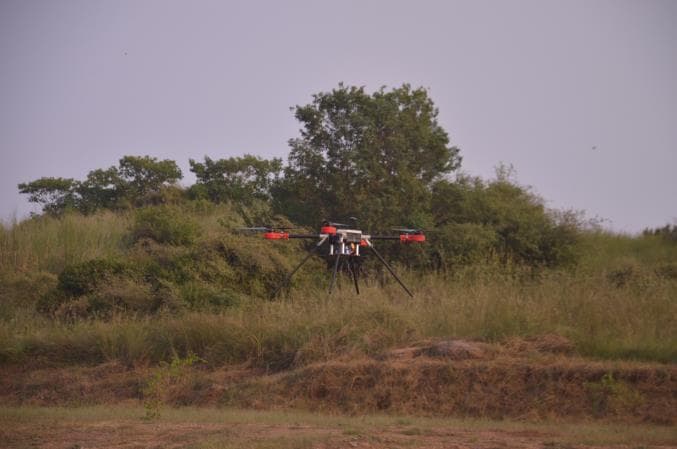
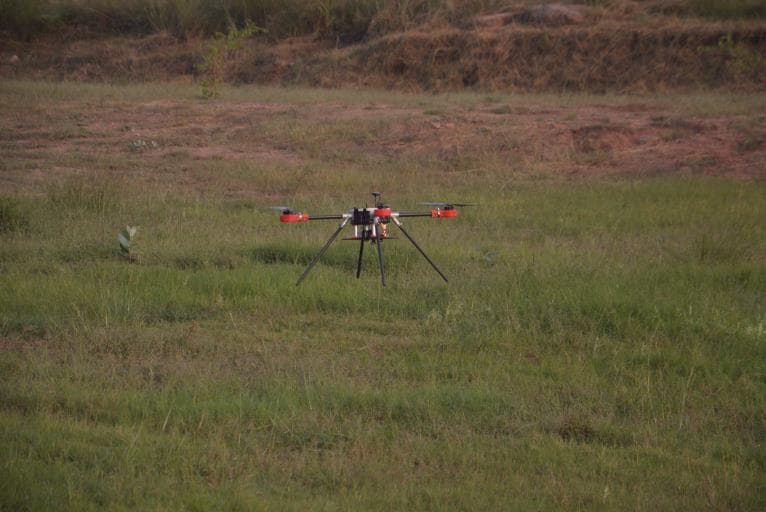
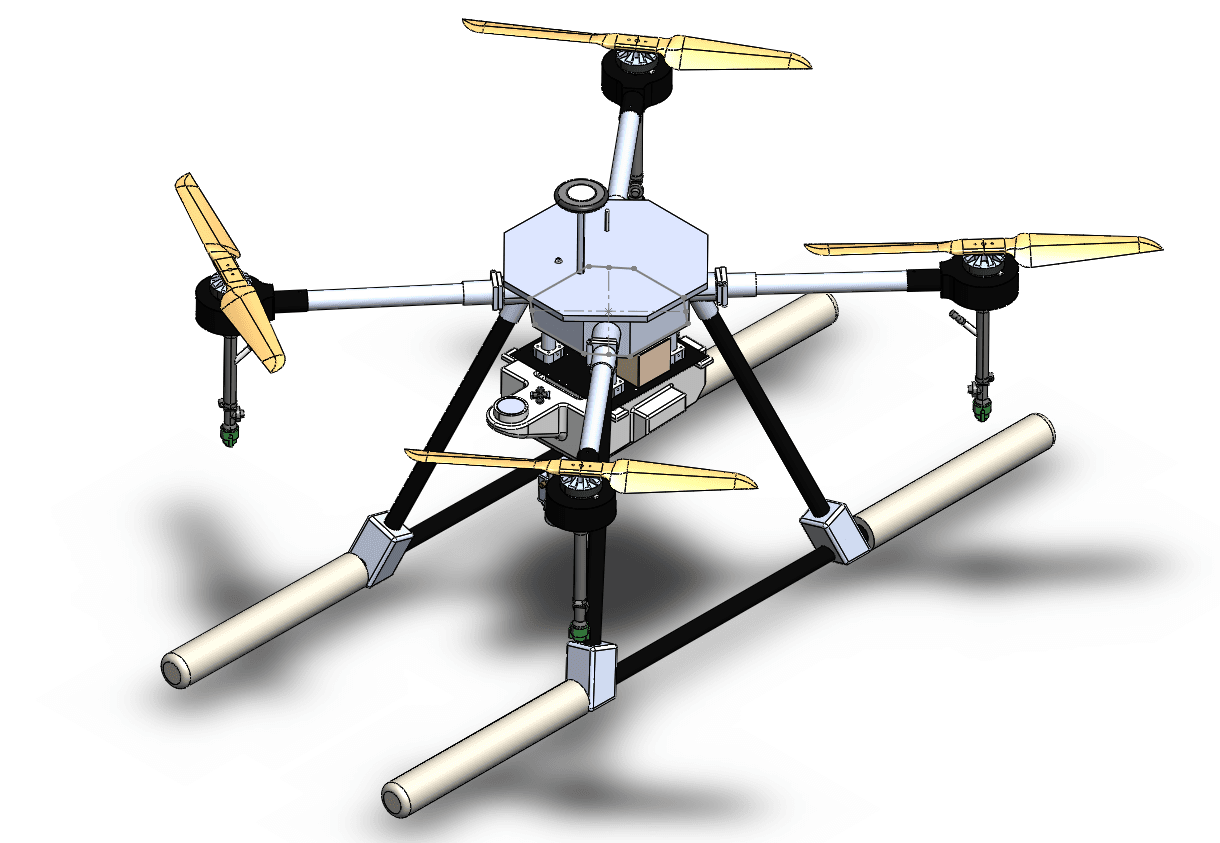
Agricultural locust infestations pose a significant threat, necessitating efficient and autonomous pest control solutions. This project aimed to develop an unmanned aerial vehicle (UAV) capable of precisely spraying pesticides over affected areas. An X-shaped quadcopter design was chosen, incorporating a combination of aluminum and carbon fiber for its frame to balance weight and durability. The design process involved extensive CAD modeling, followed by rigorous engineering analyses including Finite Element Analysis (FEA) for static stress, Computational Fluid Dynamics (CFD) for aerodynamic performance, and topology optimization to refine structural components. The payload delivery system was optimized to uniformly spray a half-acre area, with four nozzles strategically placed beneath each motor. The final design, weighing 6.4 kg with a 2.4 kg payload capacity, demonstrated the capability to autonomously navigate a 4km route and effectively deliver pesticides. These analyses validated the UAV's structural integrity, aerodynamic stability, and mission effectiveness, leading to a robust and environmentally conscious solution for agricultural pest management.
Results
Need a similar simulation?
Get a fixed-price quote within 24 hours.