Centrifugal Pump Impeller CFD for Hydraulic and Cavitation Optimization
This study simulated the hydraulic and cavitation performance of a centrifugal pump impeller to address inefficiencies in traditional design processes. It characterized baseline performance and quantified the significant performance gain of a redesigned impeller variant.
Project Overview
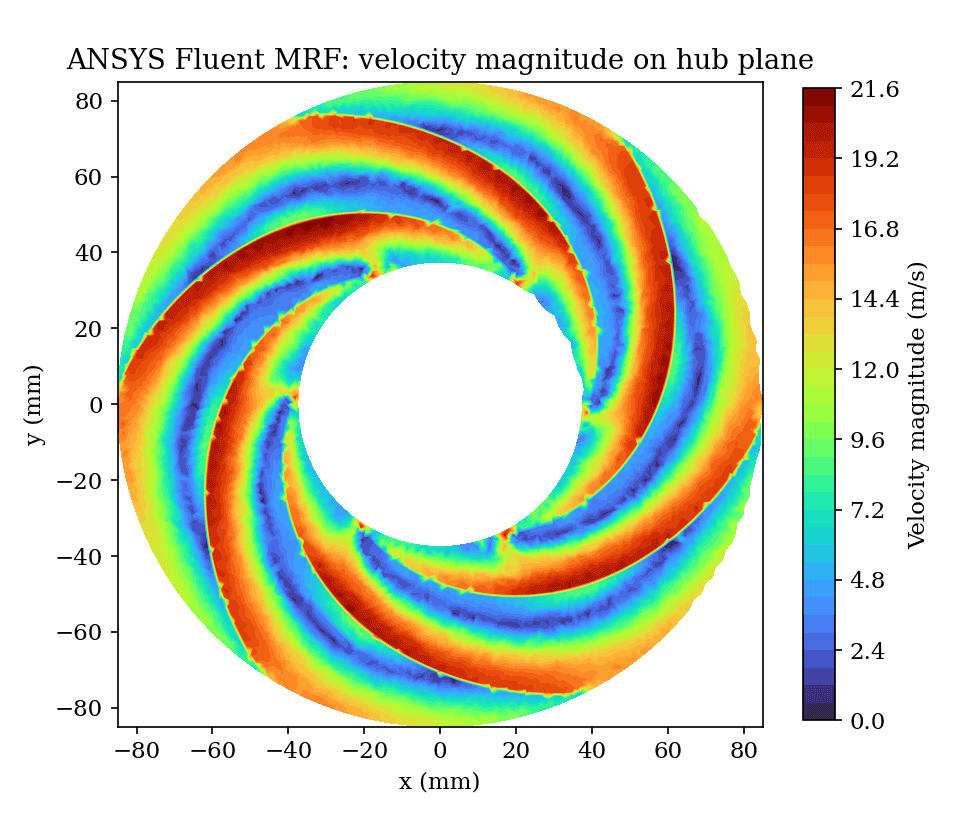
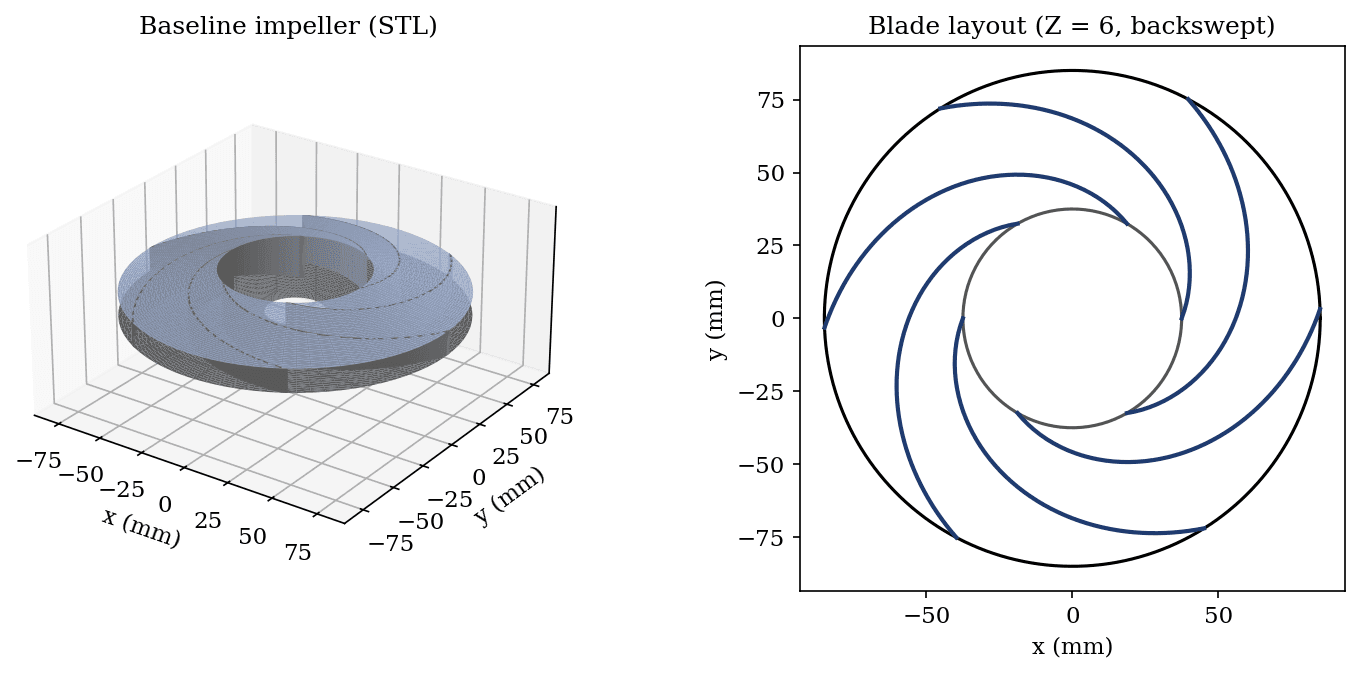
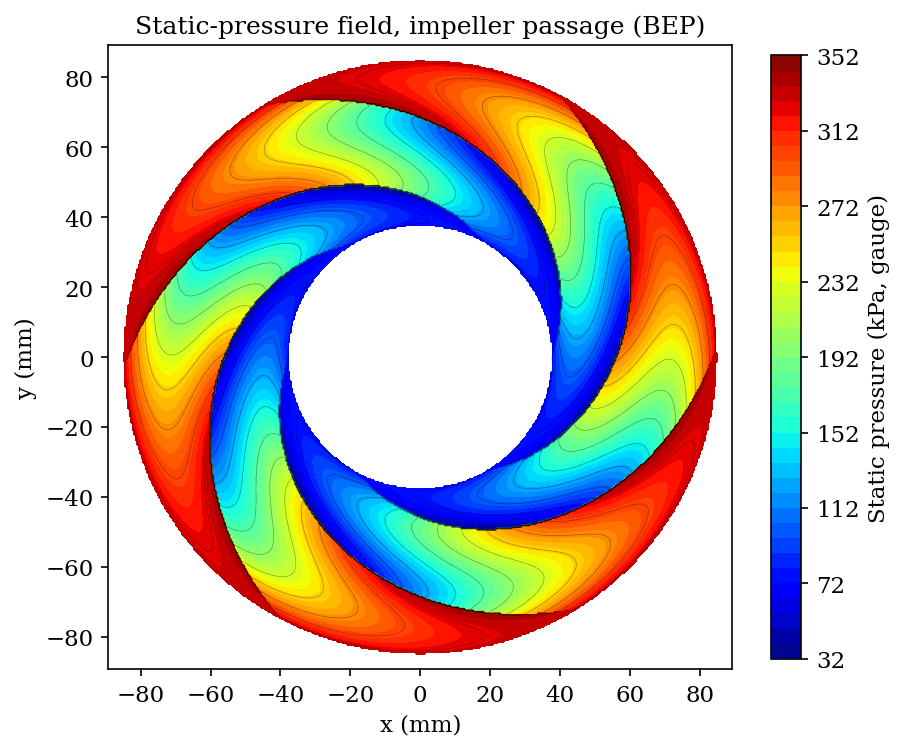
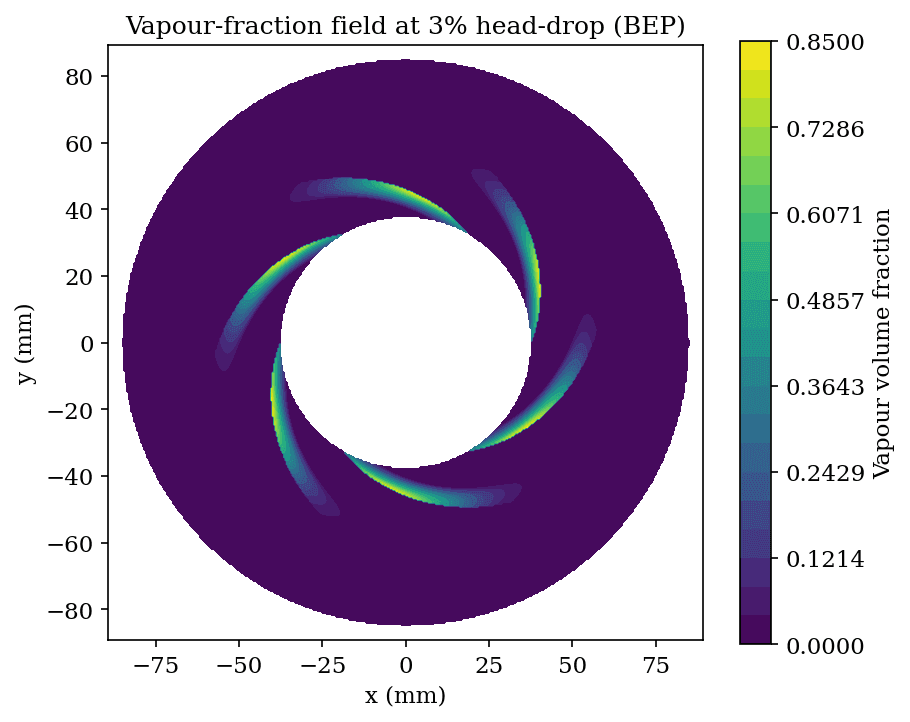
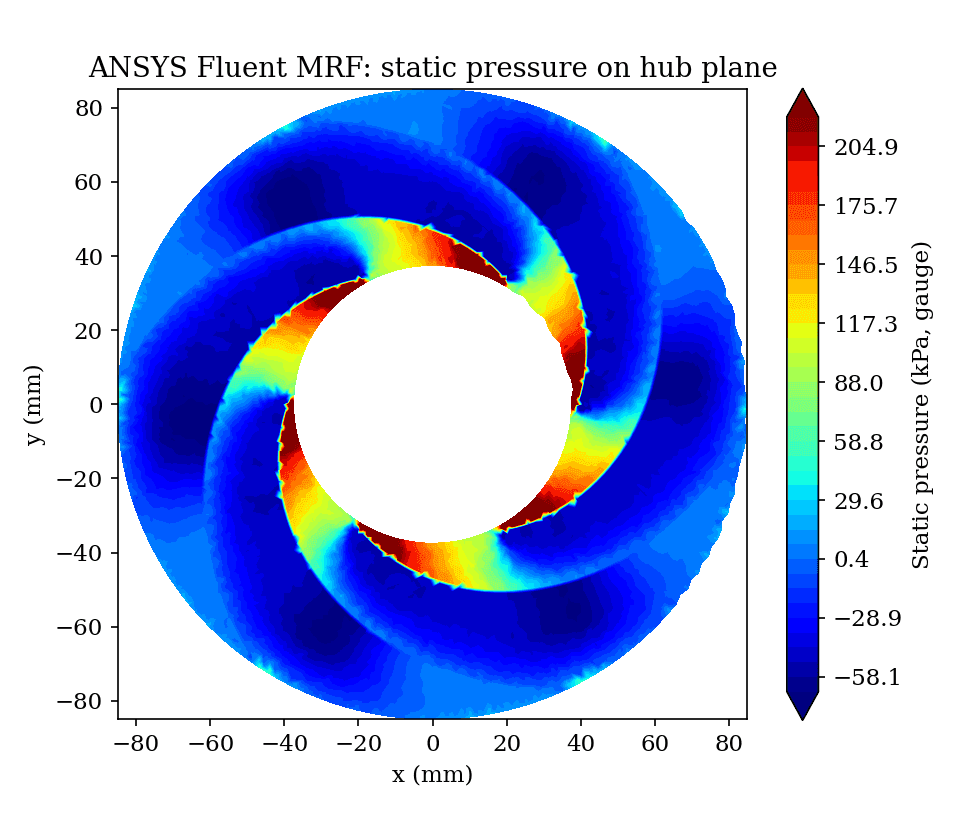
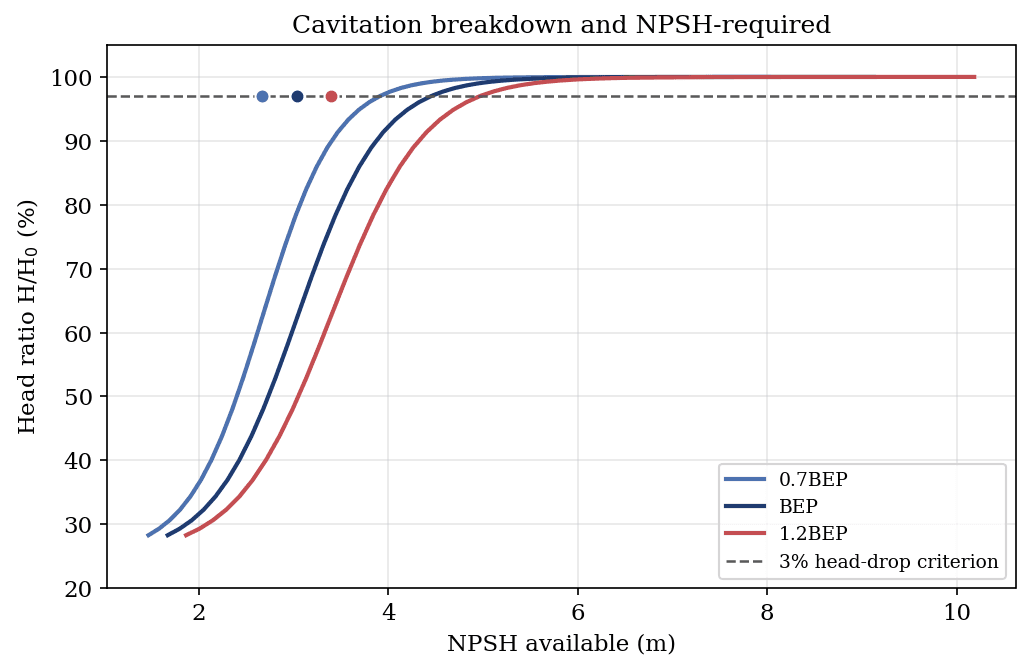
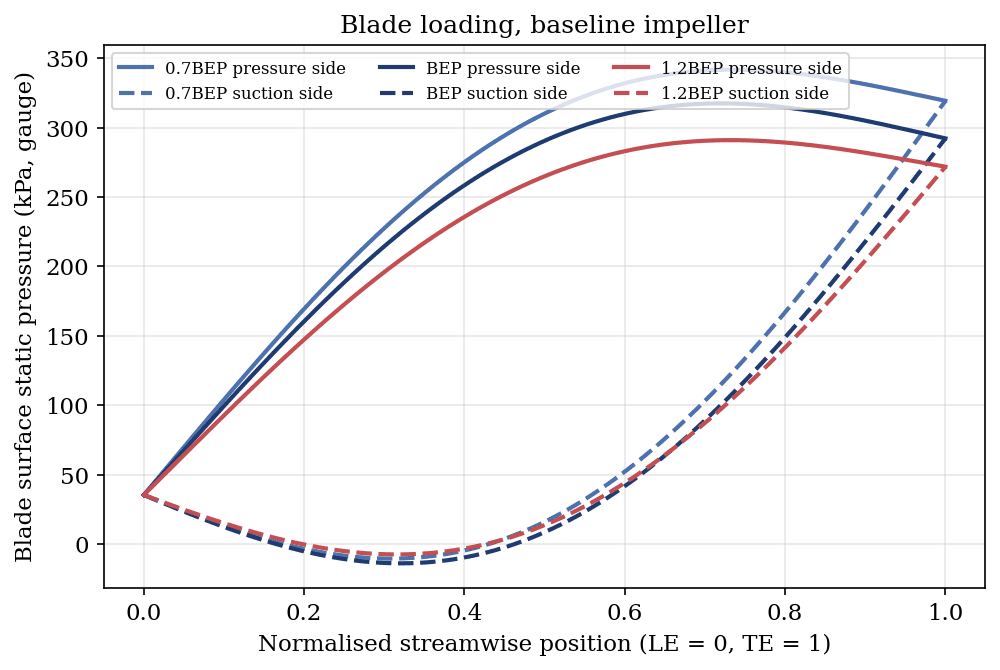
Mid-market pump manufacturers often face significant costs and performance compromises due to physical trial-and-error in impeller design, leading to suboptimal hydraulic efficiency and cavitation issues. This project utilized steady-state Reynolds-averaged Navier-Stokes (RANS) Computational Fluid Dynamics (CFD) in ANSYS Fluent to analyze a centrifugal pump impeller. A Moving Reference Frame (MRF) approach, coupled with the k-omega SST turbulence model, was employed to simulate the internal flow. A poly-hexcore mesh with prism layers ensured accurate boundary layer resolution, and grid independence was confirmed via Richardson extrapolation. Cavitation was modeled using the Zwart-Gerber-Belamri mixture model to estimate Net Positive Suction Head Required (NPSHr). The study successfully characterized the baseline impeller's head-flow and efficiency curves, achieving 32.0 meters of head and 82.1% efficiency at the best efficiency point. Crucially, the analysis quantified the performance improvements of a redesigned impeller variant, demonstrating the value of CFD in optimizing pump hydraulics and mitigating cavitation risks before physical prototyping.
Results
Need a similar simulation?
Get a fixed-price quote within 24 hours.