CFD Analysis of Cavitation Risk in a Dam Low-Level Outlet Gate
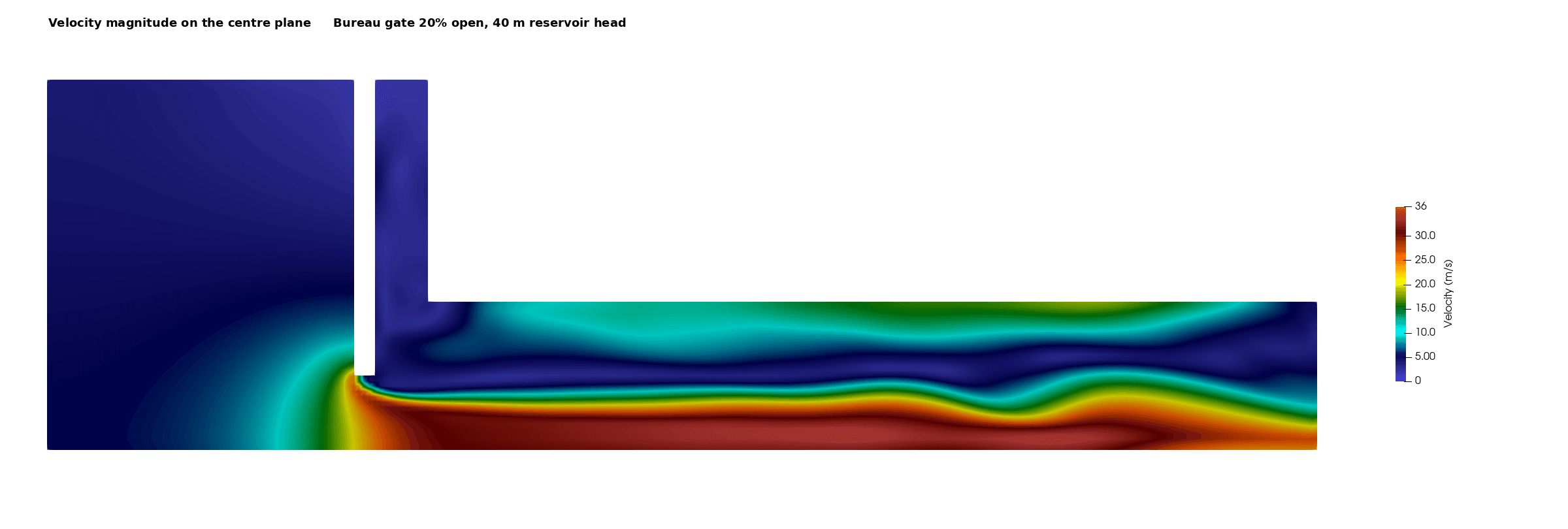
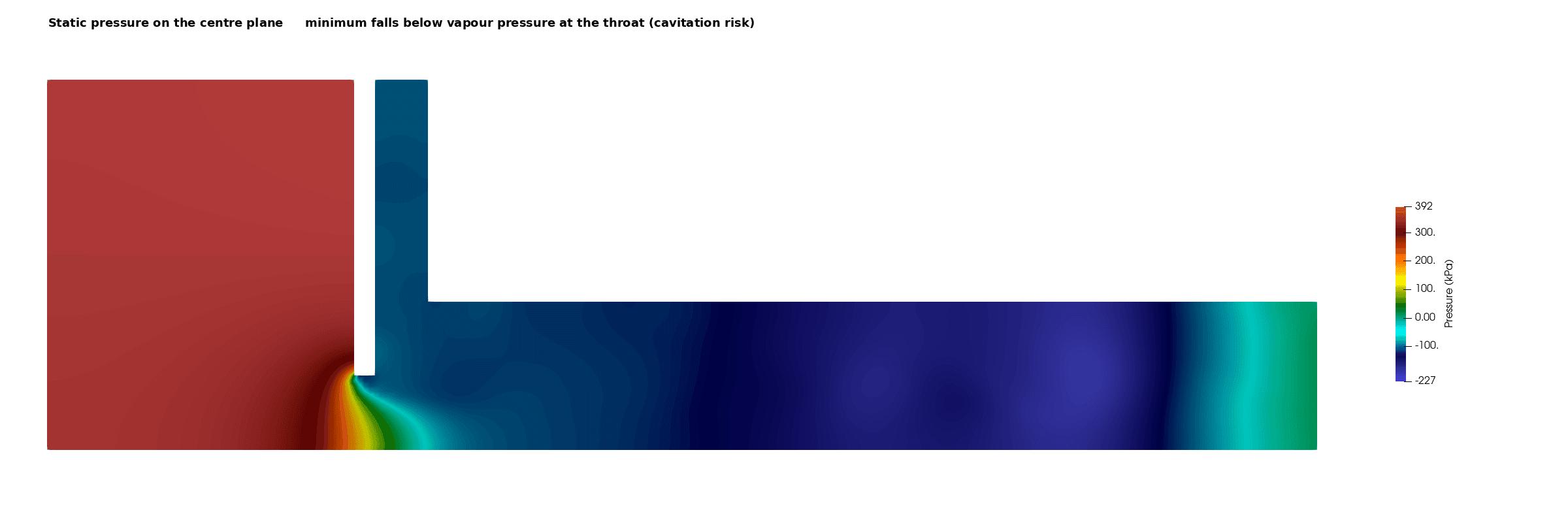
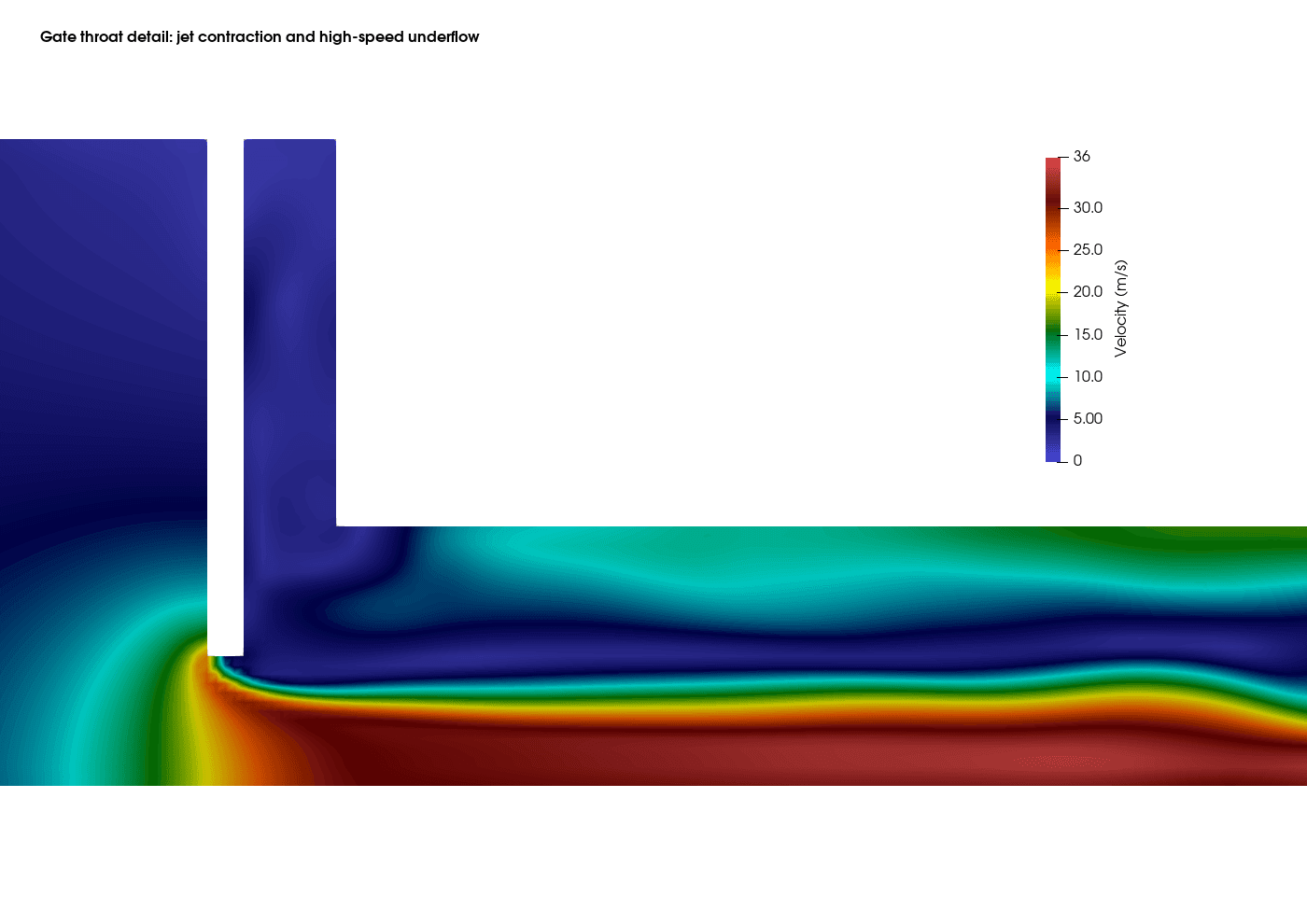
This project involved a Computational Fluid Dynamics (CFD) study of a dam low-level outlet controlled by a partially open vertical gate to understand its complex hydrodynamic behavior. The simulation accurately captured critical flow phenomena, including jet contraction and low-pressure regions, enabling a robust assessment of cavitation risk within the structure.
Project Overview
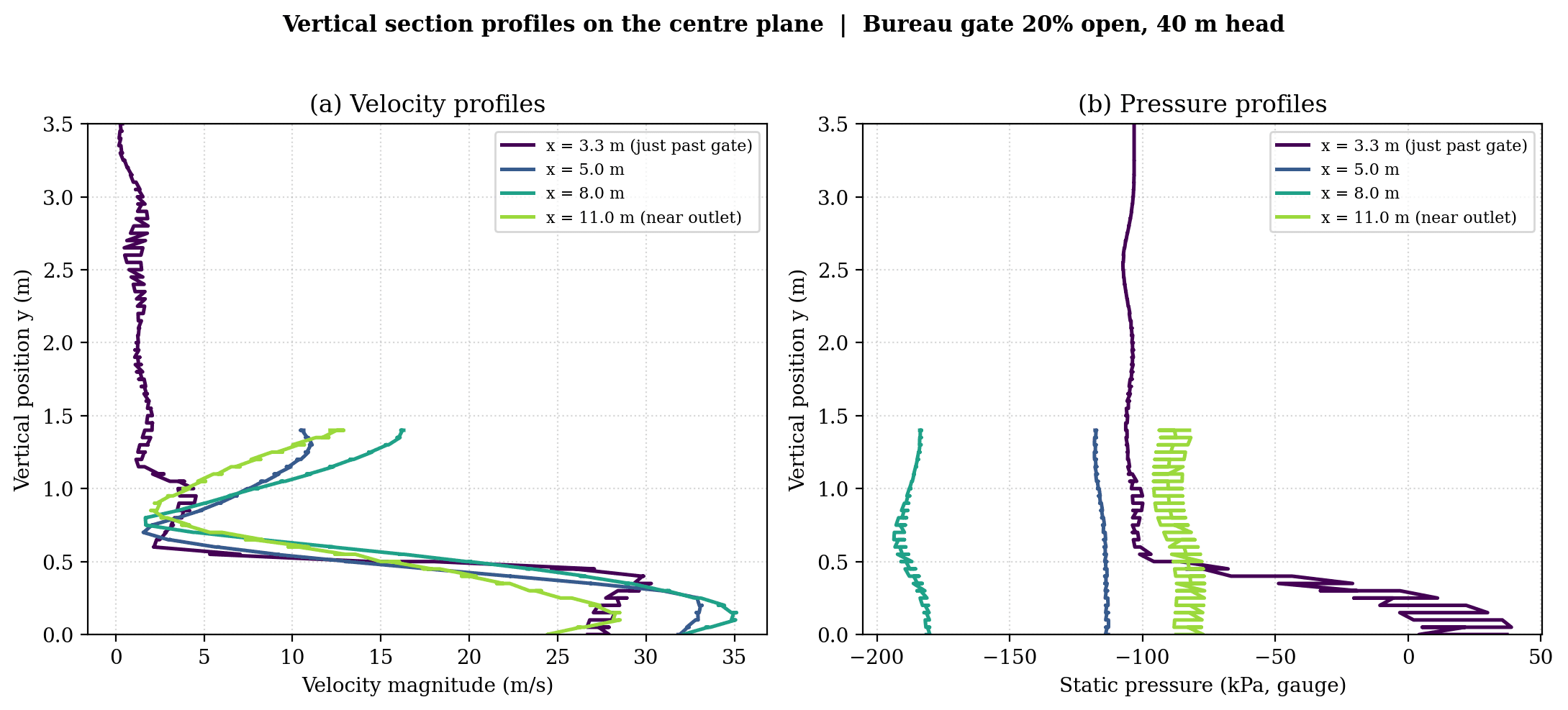
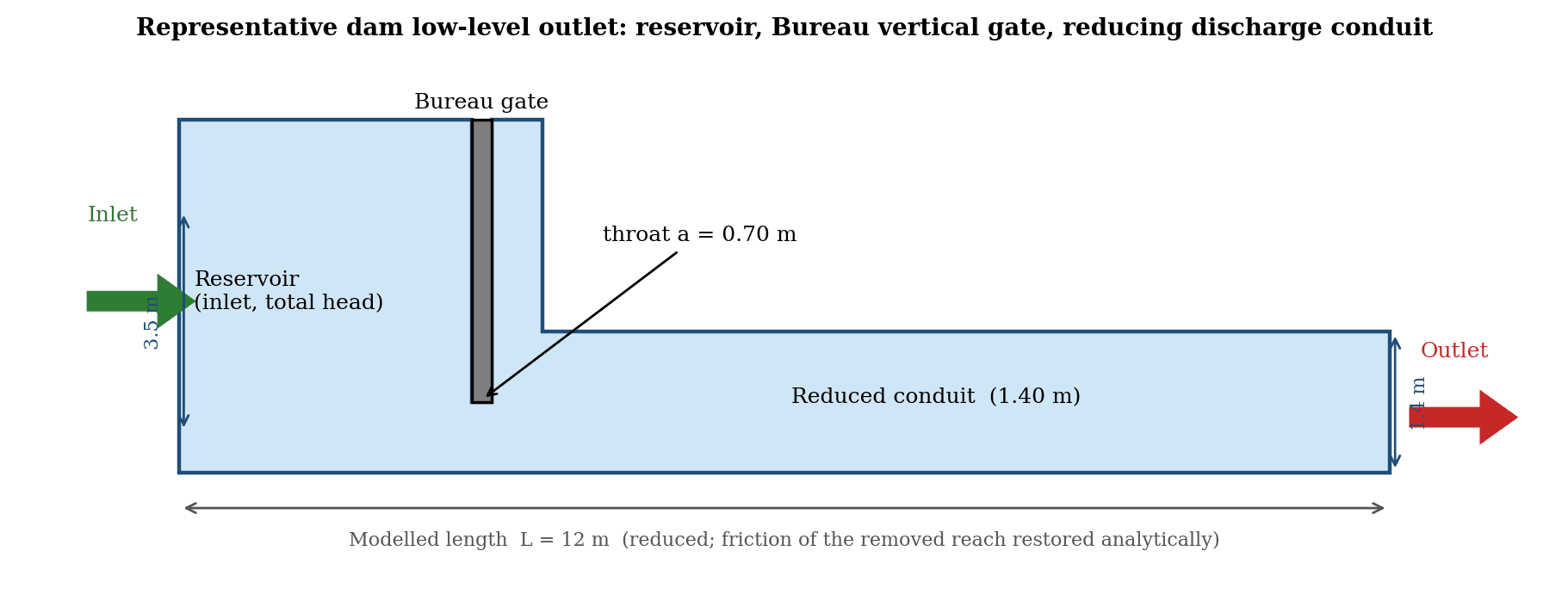
Dam low-level outlets are critical infrastructure, and understanding their hydrodynamic performance, especially at partial gate openings, is crucial for preventing issues like cavitation. This project used Computational Fluid Dynamics (CFD) to model the complex flow through such an outlet. A steady-state, incompressible, turbulent flow simulation was conducted using the Reynolds-averaged Navier-Stokes (RANS) equations, closed with the k-omega SST turbulence model. The computational domain featured a body-fitted hexahedral mesh, resolving the gate throat with high fidelity. Boundary conditions included a total pressure inlet and static pressure outlet, with convergence monitored via overall mass balance. Cavitation risk was explicitly assessed using the cavitation index. The simulation successfully demonstrated the ability to capture critical flow features such as strong local acceleration, jet contraction, and regions of low static pressure downstream of the partially open vertical gate. This comprehensive analysis provides physically consistent data for evaluating the potential for cavitation, ensuring reliable design and operation of similar hydraulic structures.
Results
Need a similar simulation?
Get a fixed-price quote within 24 hours.