CFD Analysis of Bullet Aerodynamics Across Subsonic to Supersonic Regimes
This project utilized Computational Fluid Dynamics to analyze the aerodynamic performance of a bullet across a wide range of velocities, from subsonic to supersonic. The simulations quantified drag and other aerodynamic forces, revealing significant shock wave formation at supersonic speeds and distinct flow behaviors across all tested regimes.
Project Overview
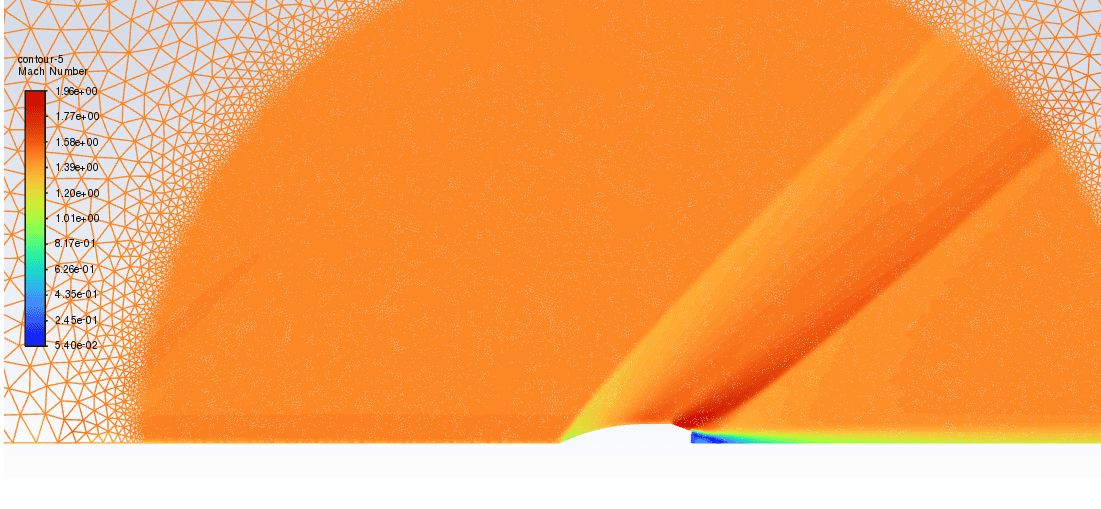
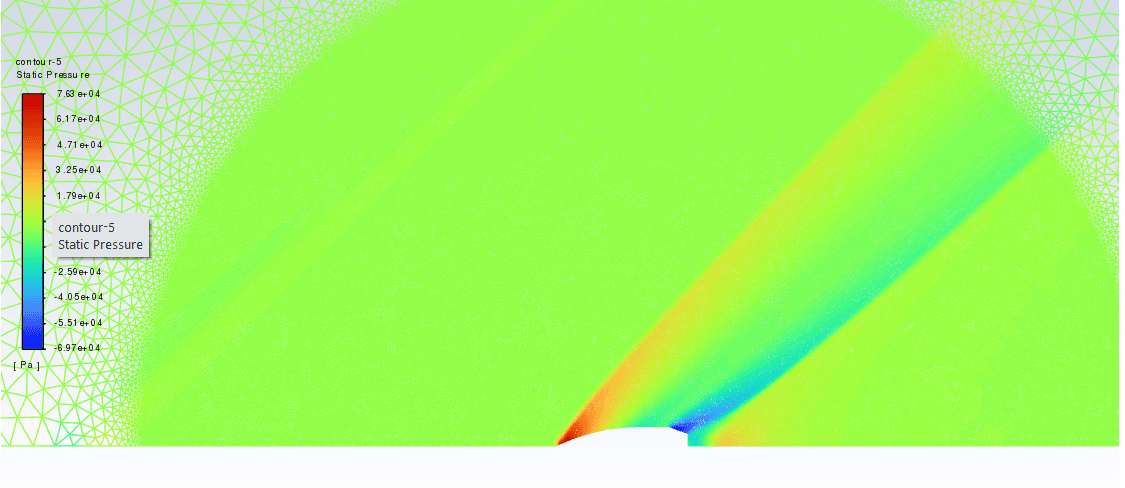
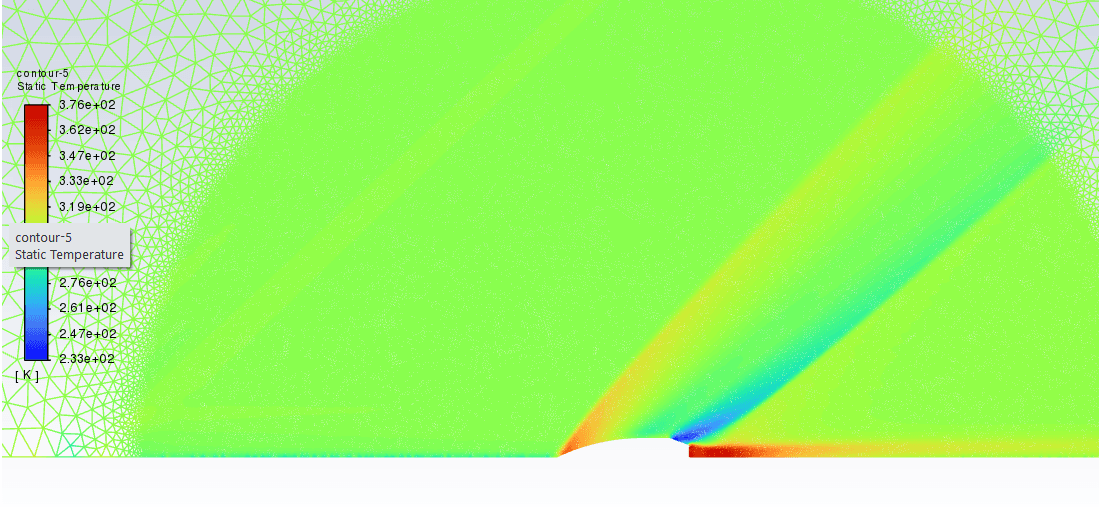
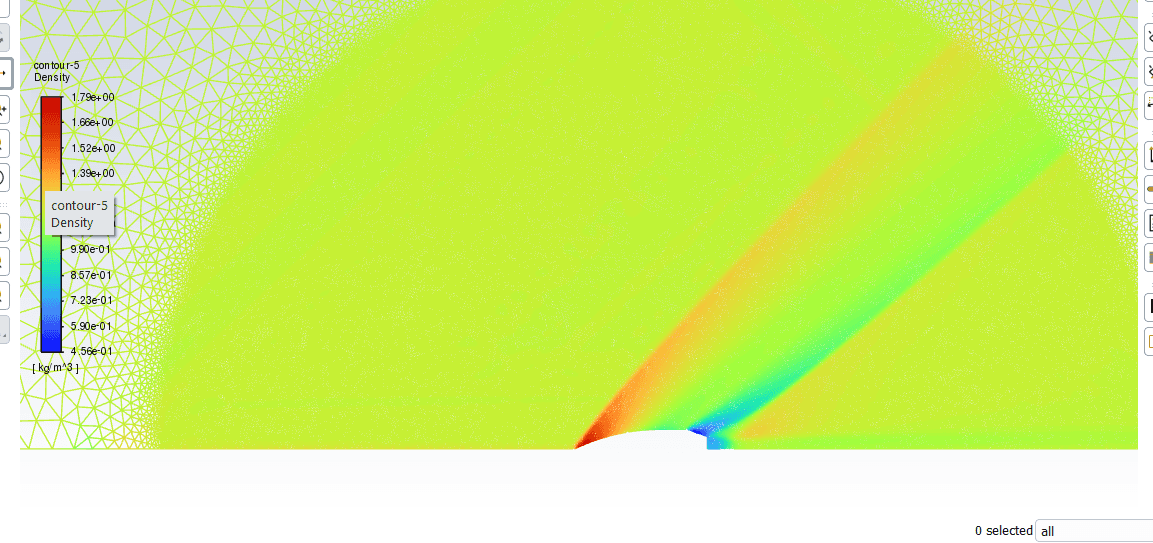
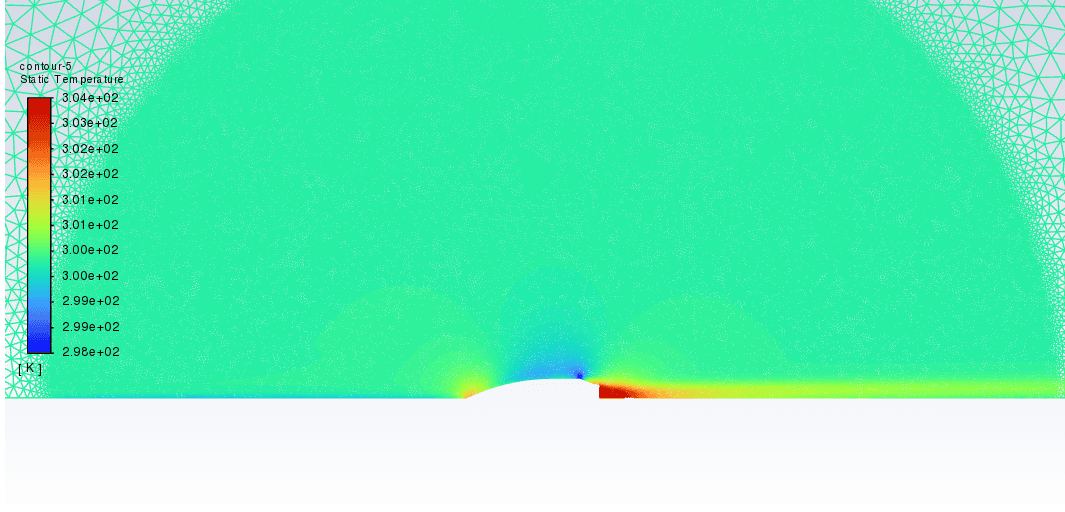
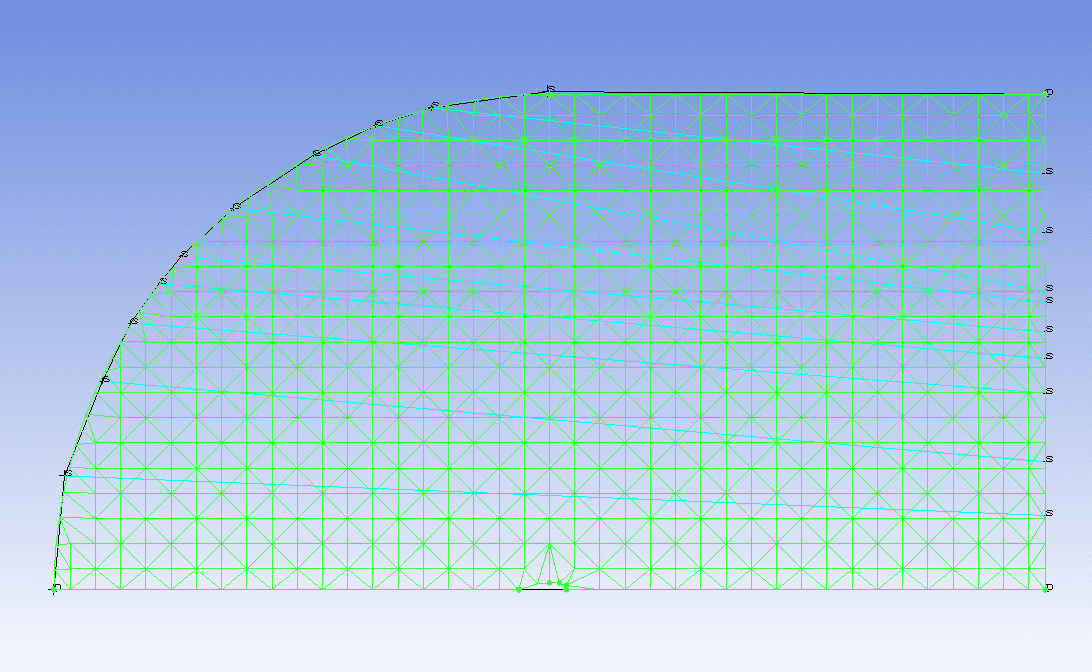
Optimizing bullet aerodynamic performance is critical for minimizing drag, enhancing speed, and extending range. This project leveraged Computational Fluid Dynamics (CFD) to analyze the intricate flow phenomena around a bullet across a broad velocity spectrum, from 50 m/s to 800 m/s. Using ANSYS Fluent, a detailed mesh was developed with local refinement, and the k-ω SST turbulence model was applied to accurately capture boundary layer effects. Air was modeled as an ideal gas at 300 K, and second-order spatial discretization schemes ensured solution accuracy. The simulations successfully quantified drag and provided comprehensive contours of Mach number, velocity, pressure, temperature, and density. Results revealed distinct flow regimes: at 800 m/s, significant shock waves formed with high-pressure stagnation points and compression heating, while lower velocities showed progressively smoother, predominantly subsonic flow with reduced aerodynamic loads. This study offers valuable insights for future bullet design optimization.
Results
Need a similar simulation?
Get a fixed-price quote within 24 hours.