Hypersonic CFD Analysis of Spinning Projectile Aerodynamics and Drag Characteristics
This project simulated the aerodynamic behavior of a spinning projectile across a wide range of velocities, including extreme hypersonic regimes, to understand complex flow phenomena. The simulations revealed significant increases in drag, pressure, and temperature, alongside the formation of strong shockwaves, particularly at extreme hypersonic speeds.
Project Overview
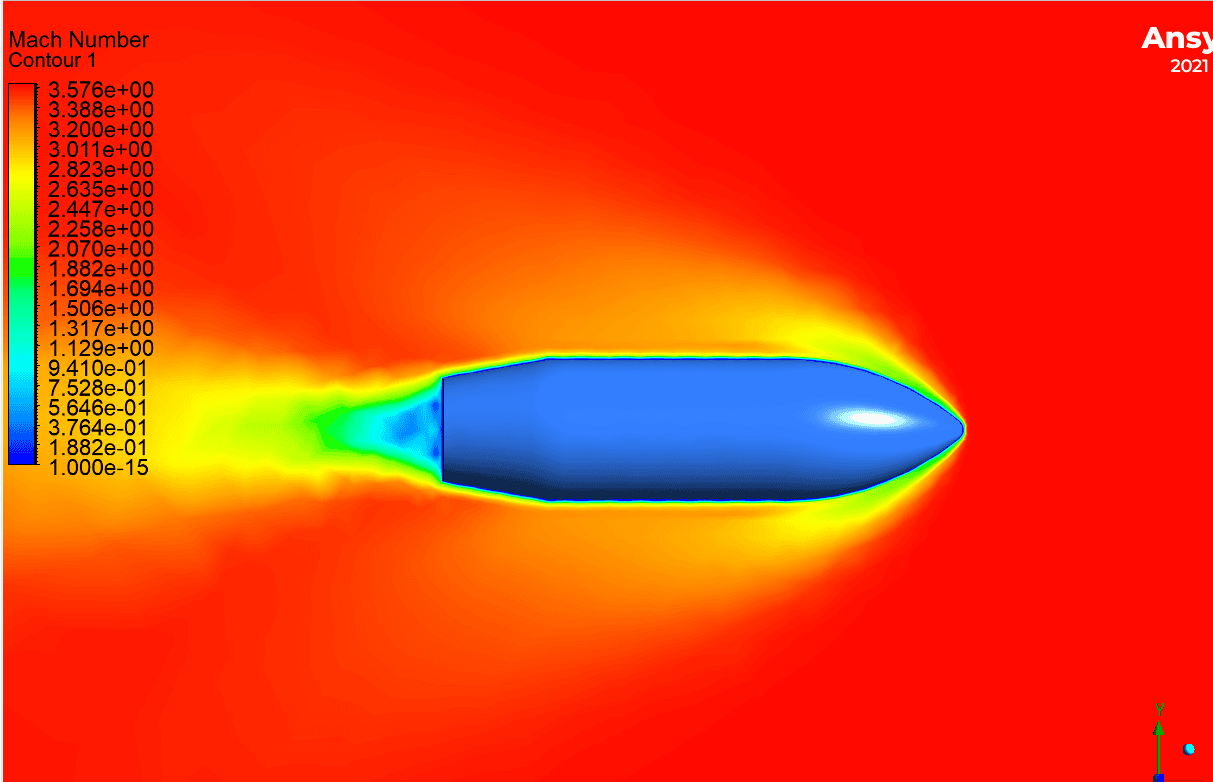
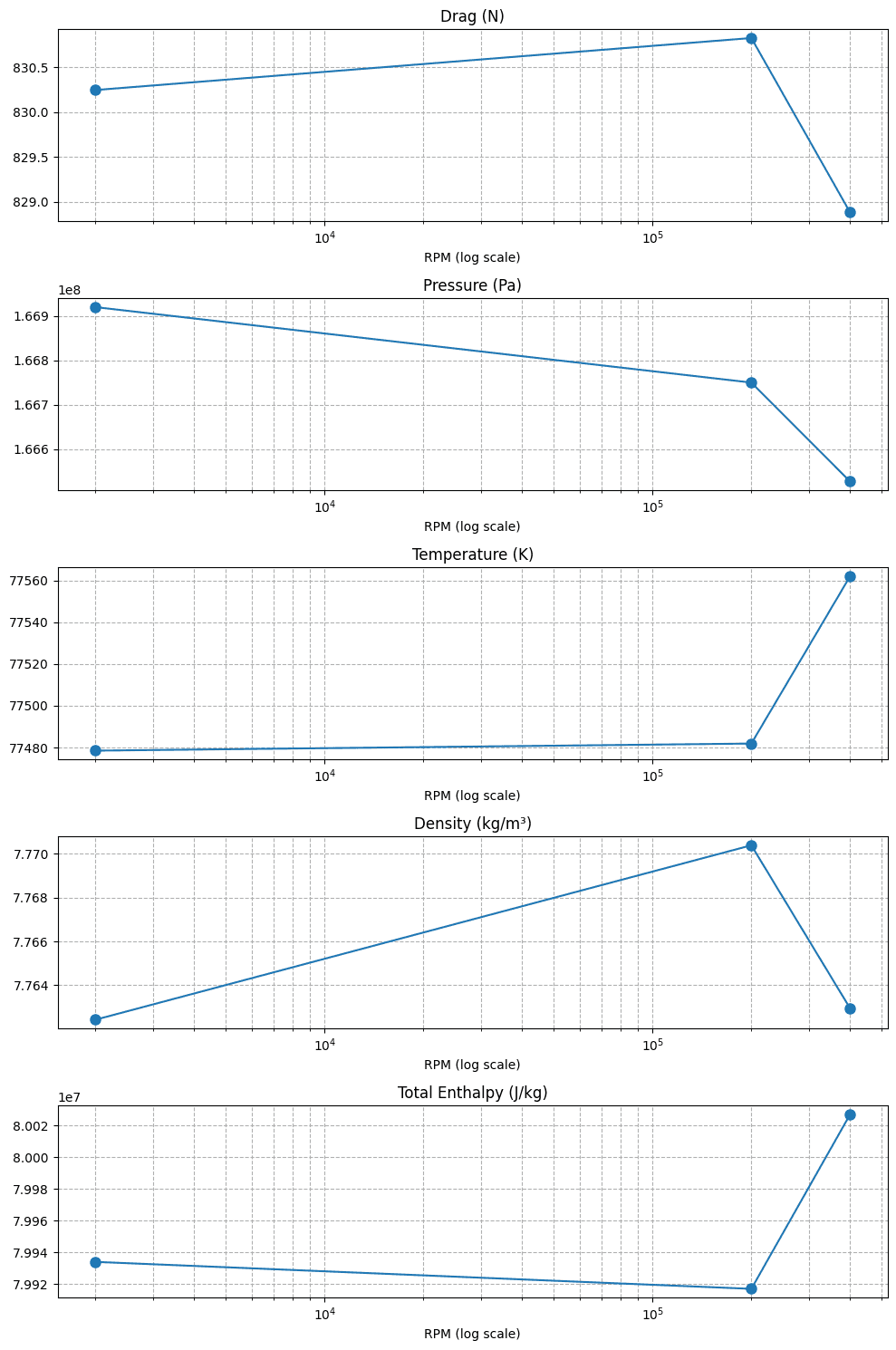
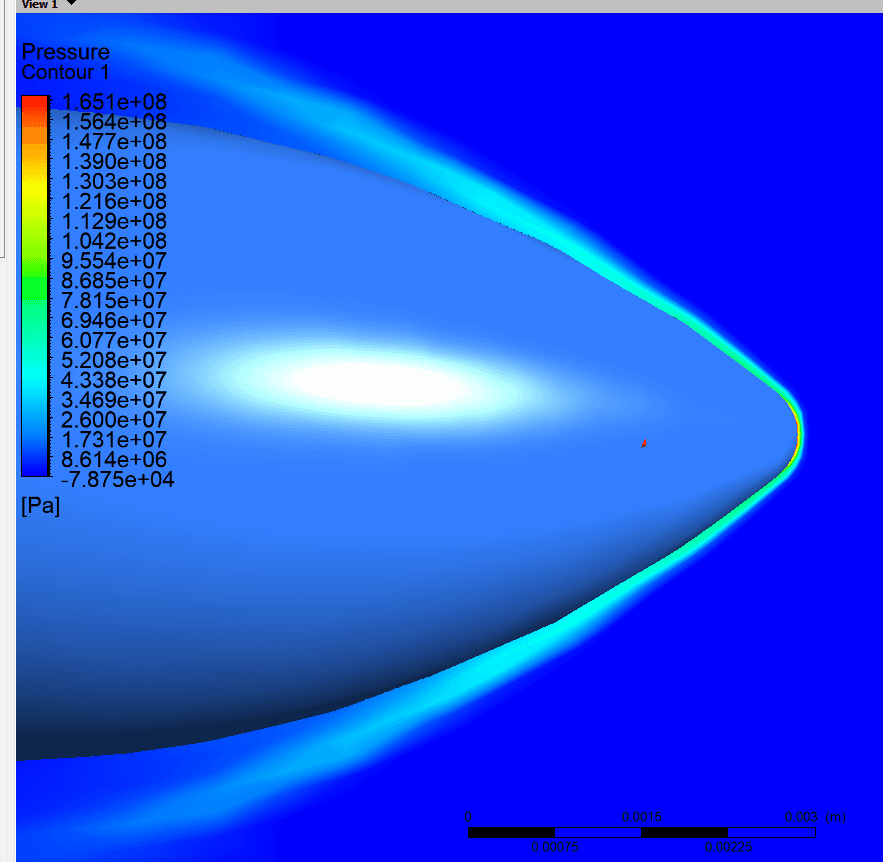
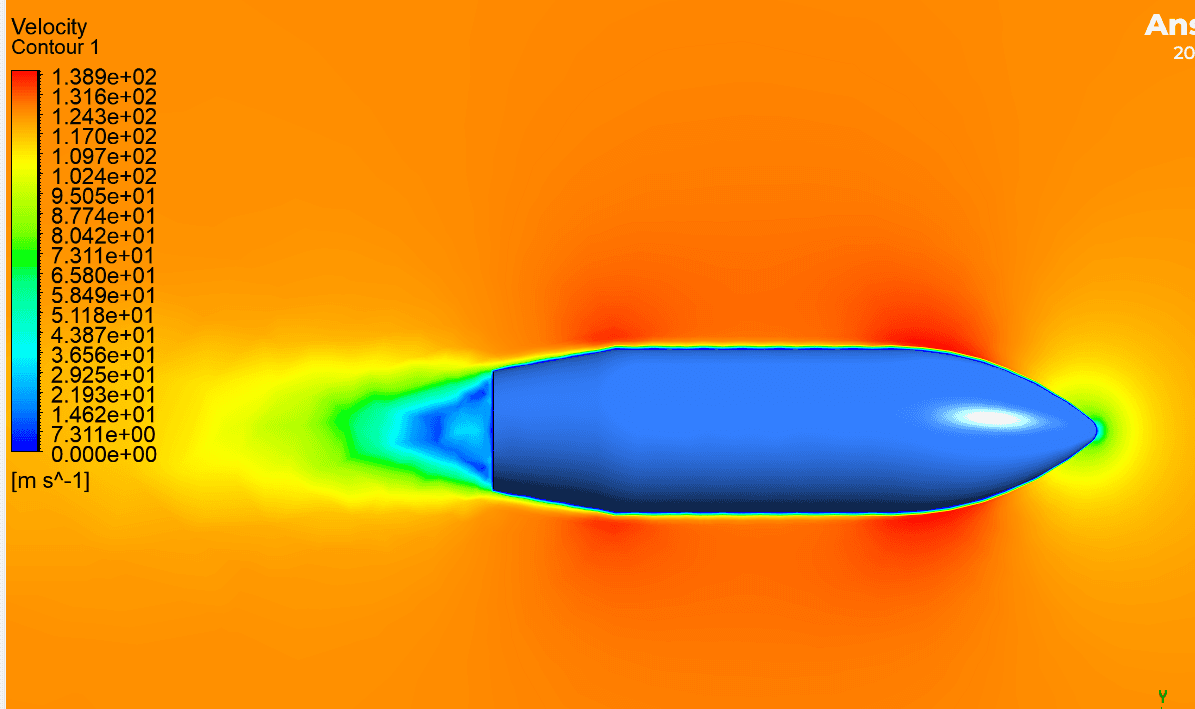
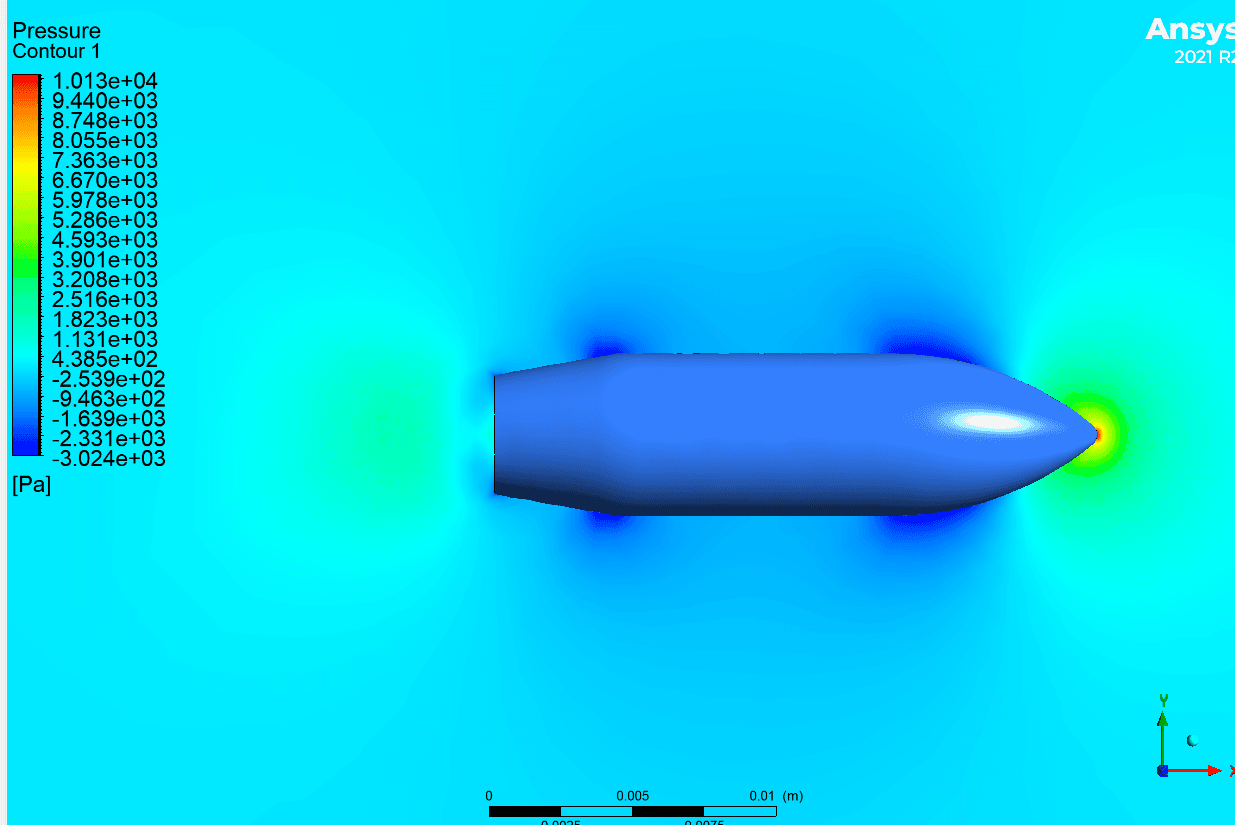
This project aimed to investigate the complex aerodynamic characteristics of a spinning projectile across a broad spectrum of flight conditions, from subsonic to extreme hypersonic velocities. Understanding these phenomena is crucial for projectile design and trajectory prediction, especially in high-speed applications. Computational Fluid Dynamics (CFD) was employed to model the flow around the projectile, considering various rotational speeds and velocities up to 45,000 km/h (Mach 36.7). The analysis focused on capturing key flow features such as shockwave formation, pressure and density distributions, and the resulting aerodynamic drag. Contour plots for Mach number, velocity, temperature, pressure, and density were generated for multiple scenarios. The simulations demonstrated a dramatic increase in drag, dynamic pressure, and temperature at supersonic and hypersonic speeds, consistent with the formation of strong shockwaves and compressibility effects. For instance, drag increased to approximately 830 N at 45,000 km/h, accompanied by dynamic pressures reaching 1.67×10⁸ Pa and significant density drops, highlighting the severe aerodynamic challenges in hypersonic flight.
Results
Need a similar simulation?
Get a fixed-price quote within 24 hours.