Aeroacoustic Modeling and Optimization Strategies for Large Wind Turbine Blades
Modern wind turbines face critical aeroacoustic challenges due to their increasing scale and proximity to communities. This review synthesizes advanced modeling and optimization strategies to achieve robust, low-noise, high-performance blade designs.
Project Overview
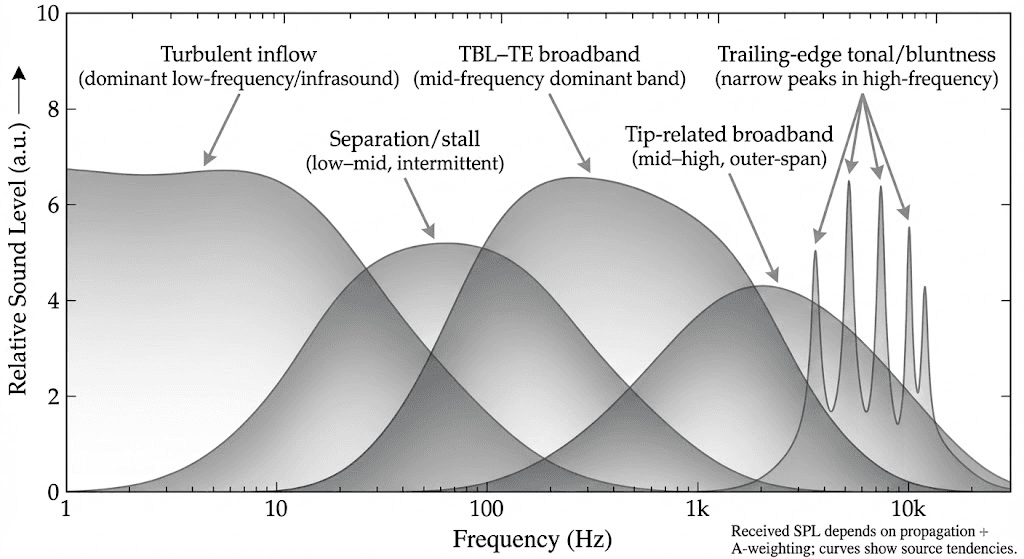
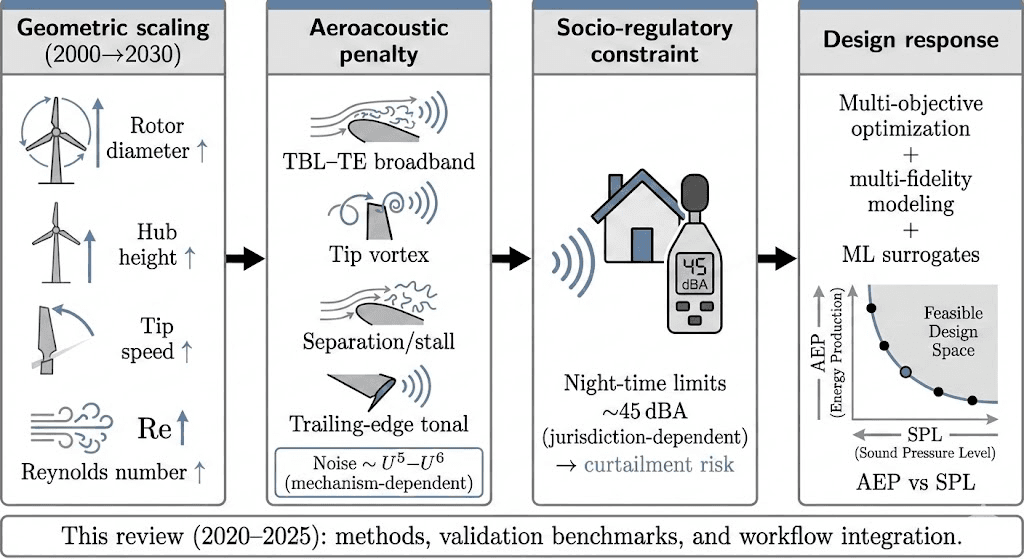
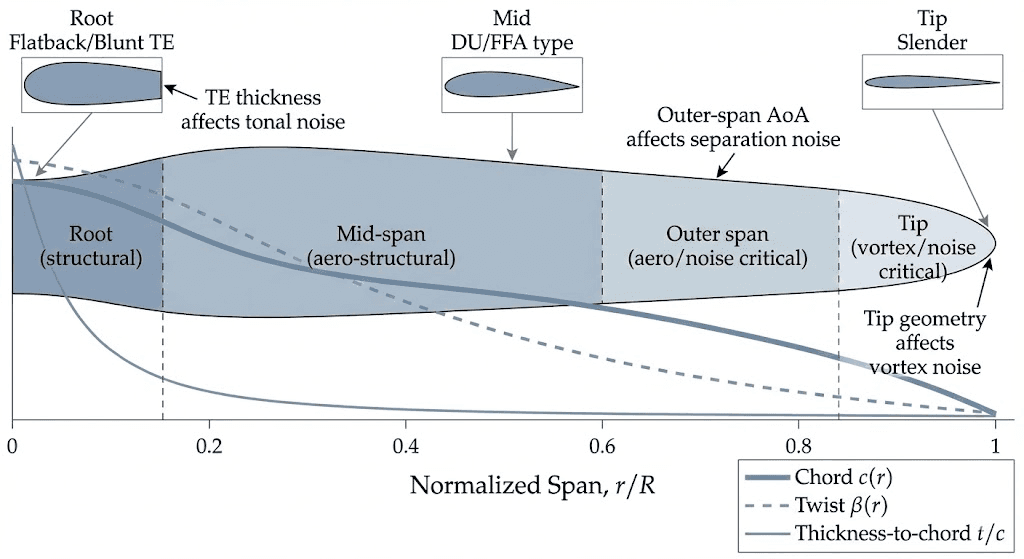
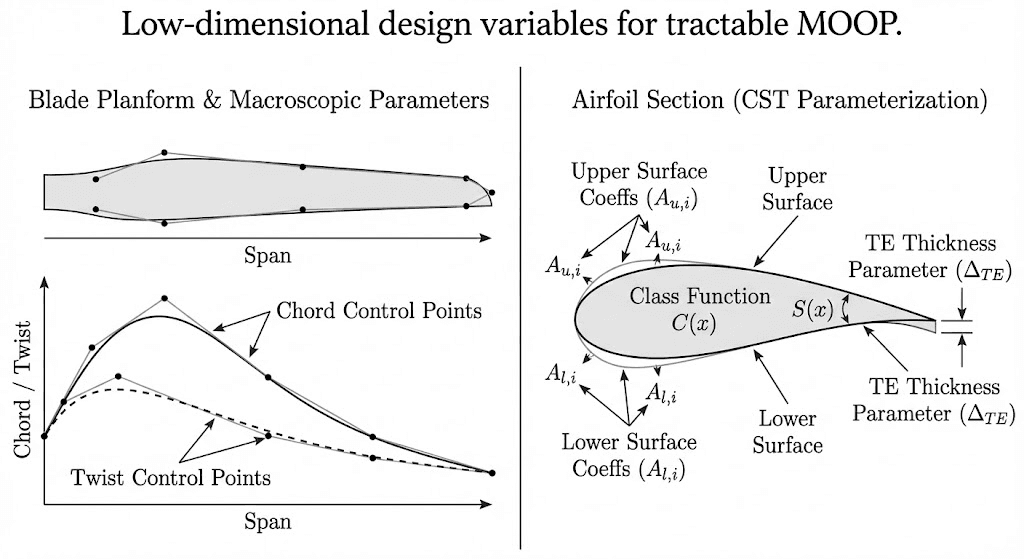
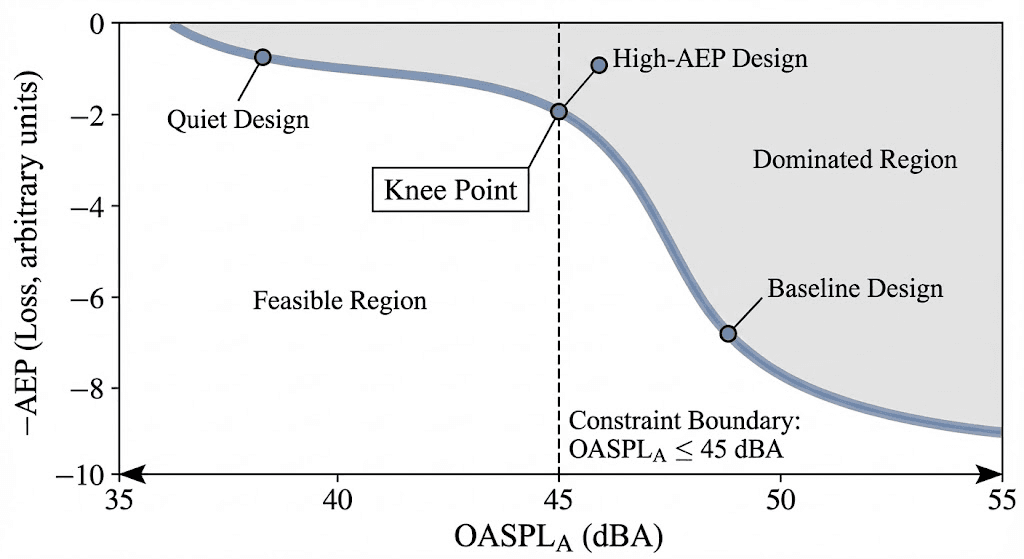
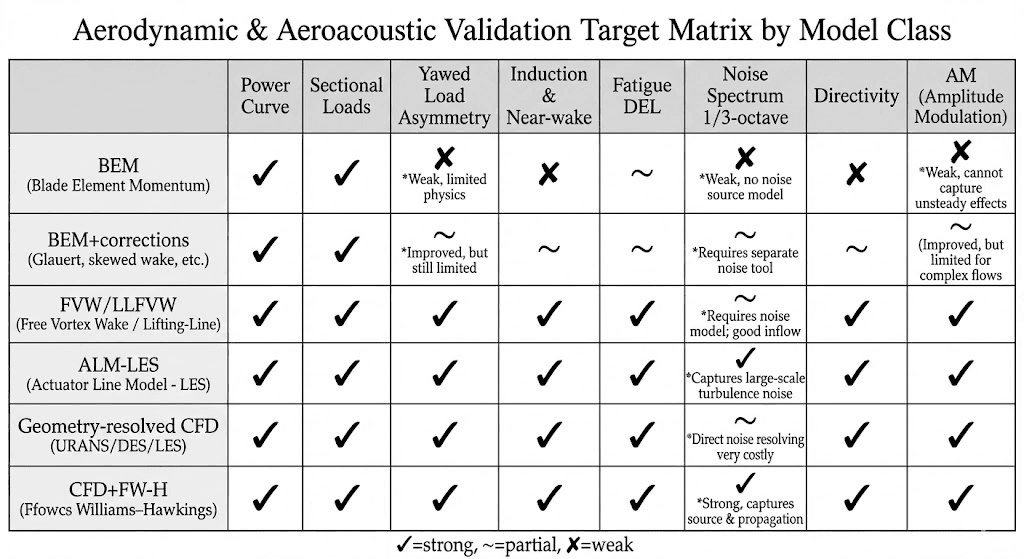
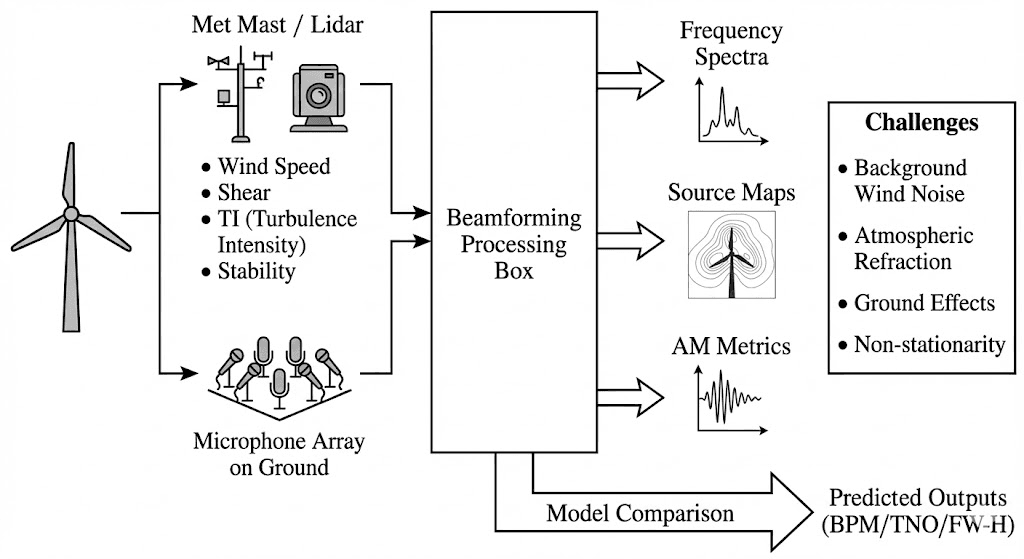
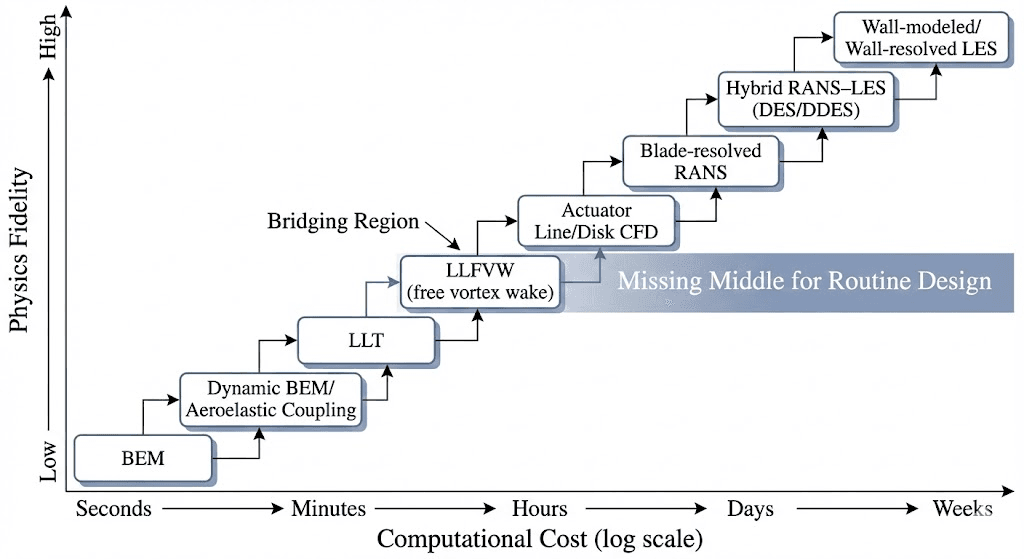
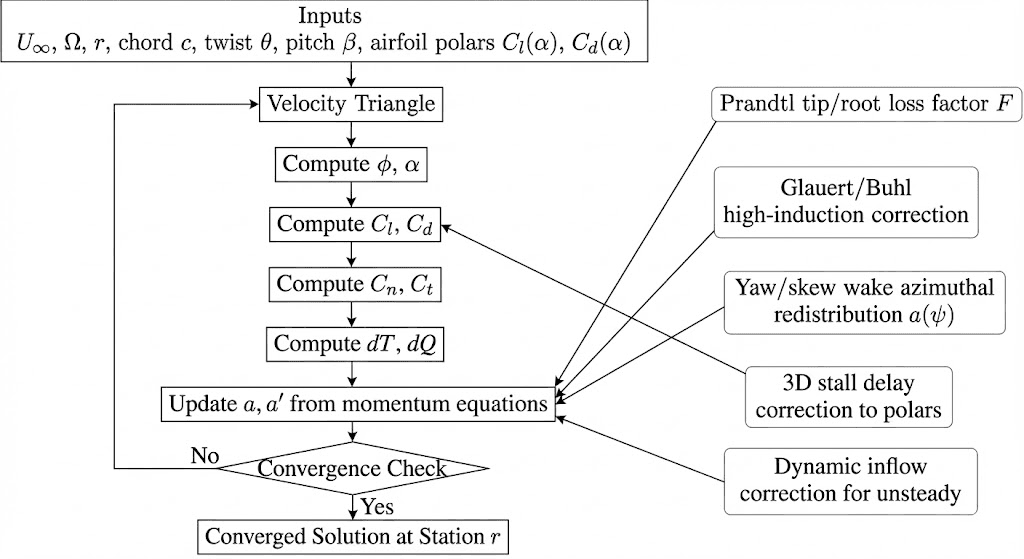
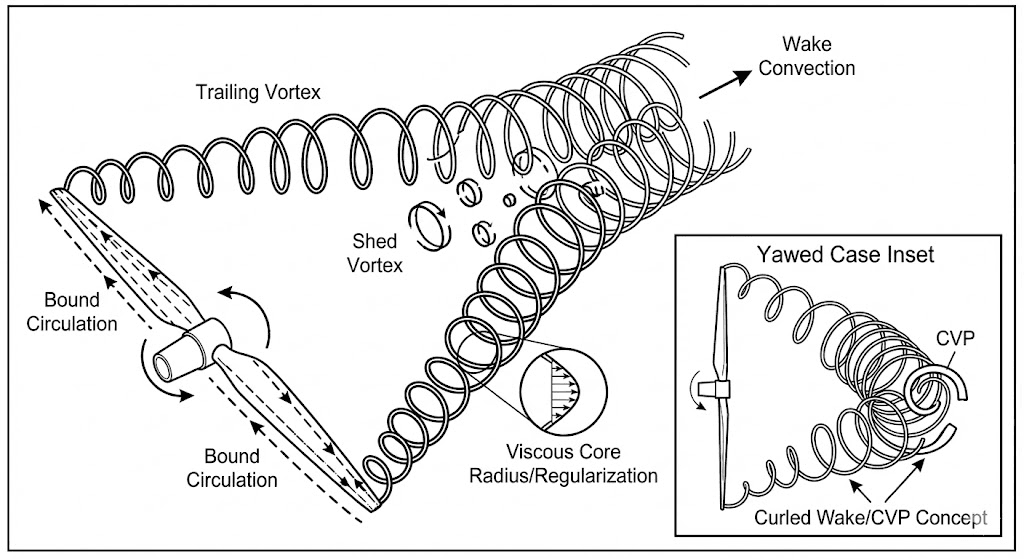
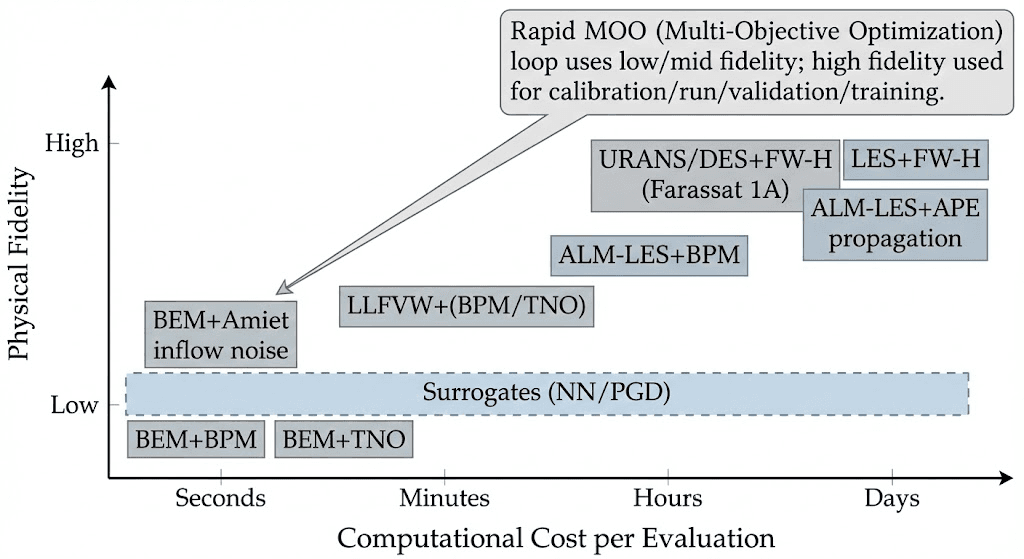
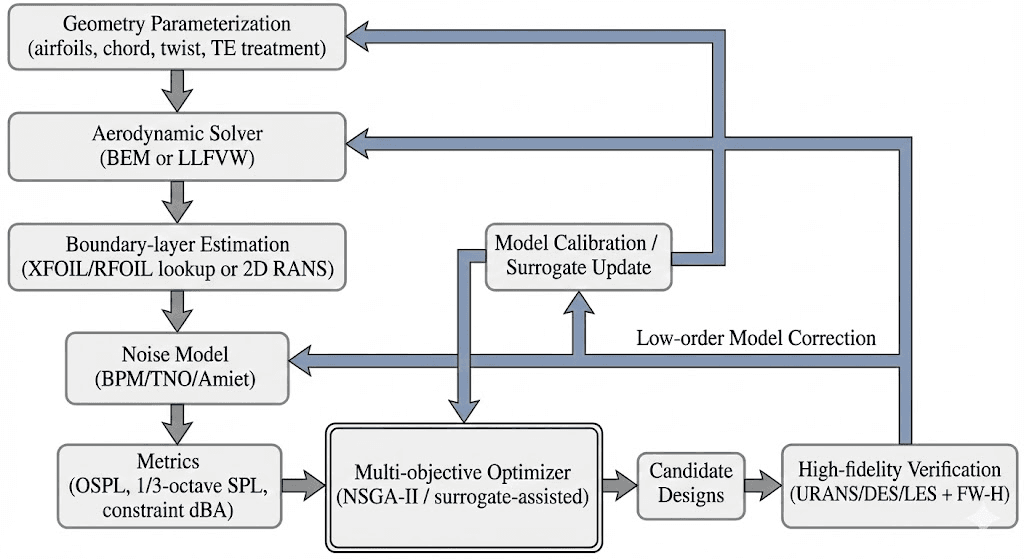
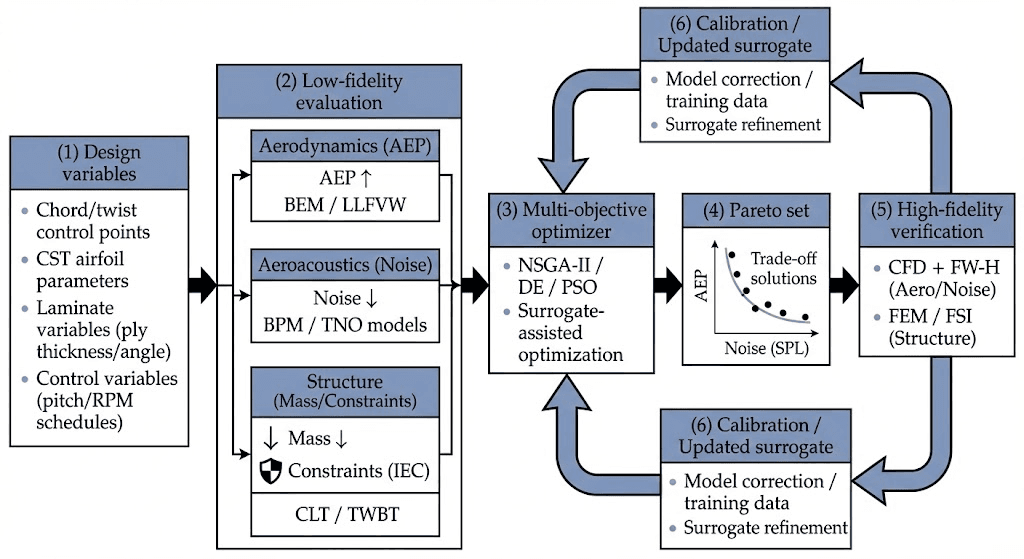
The rapid scaling of modern wind turbines has elevated aeroacoustic emissions to a primary design constraint, alongside energy capture and structural integrity. With projects operating closer to communities, accurate noise prediction and mitigation are crucial to avoid energy curtailment and financial risk. This comprehensive review synthesizes recent literature on aerodynamic and aeroacoustic modeling, blade design, and optimization for utility-scale horizontal-axis wind turbines. It presents a hierarchical taxonomy of prediction approaches, from Blade Element Momentum to high-fidelity CFD, and examines semi-empirical and physics-based aeroacoustic models, including the Ffowcs–Williams–Hawkings analogy. The work links dominant noise mechanisms to blade geometry and control variables. Ultimately, the review outlines best practices for navigating the complex power–noise trade space using multi-objective and surrogate-assisted optimization frameworks, identifying robust, low-noise, high-performance blade designs under uncertainty.
Results

Need a similar simulation?
Get a fixed-price quote within 24 hours.