Gear Train Design and Bending Stress Analysis
This case study explored the systematic design and optimization of a multi-stage spur gear reduction train for power transmission applications. The analysis demonstrated a methodology for achieving compact system architectures while ensuring structural integrity under specified operating conditions.
Project Overview
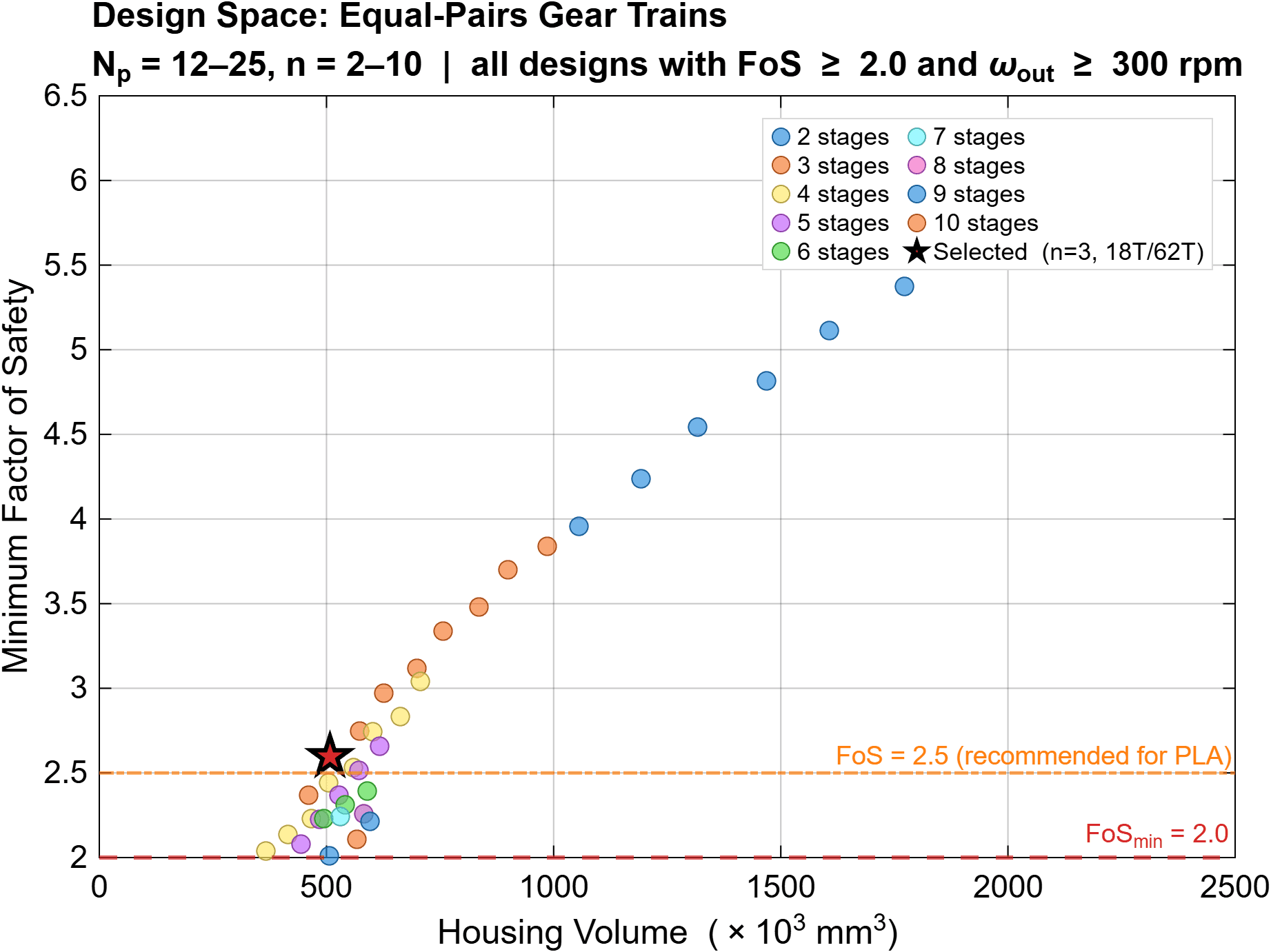
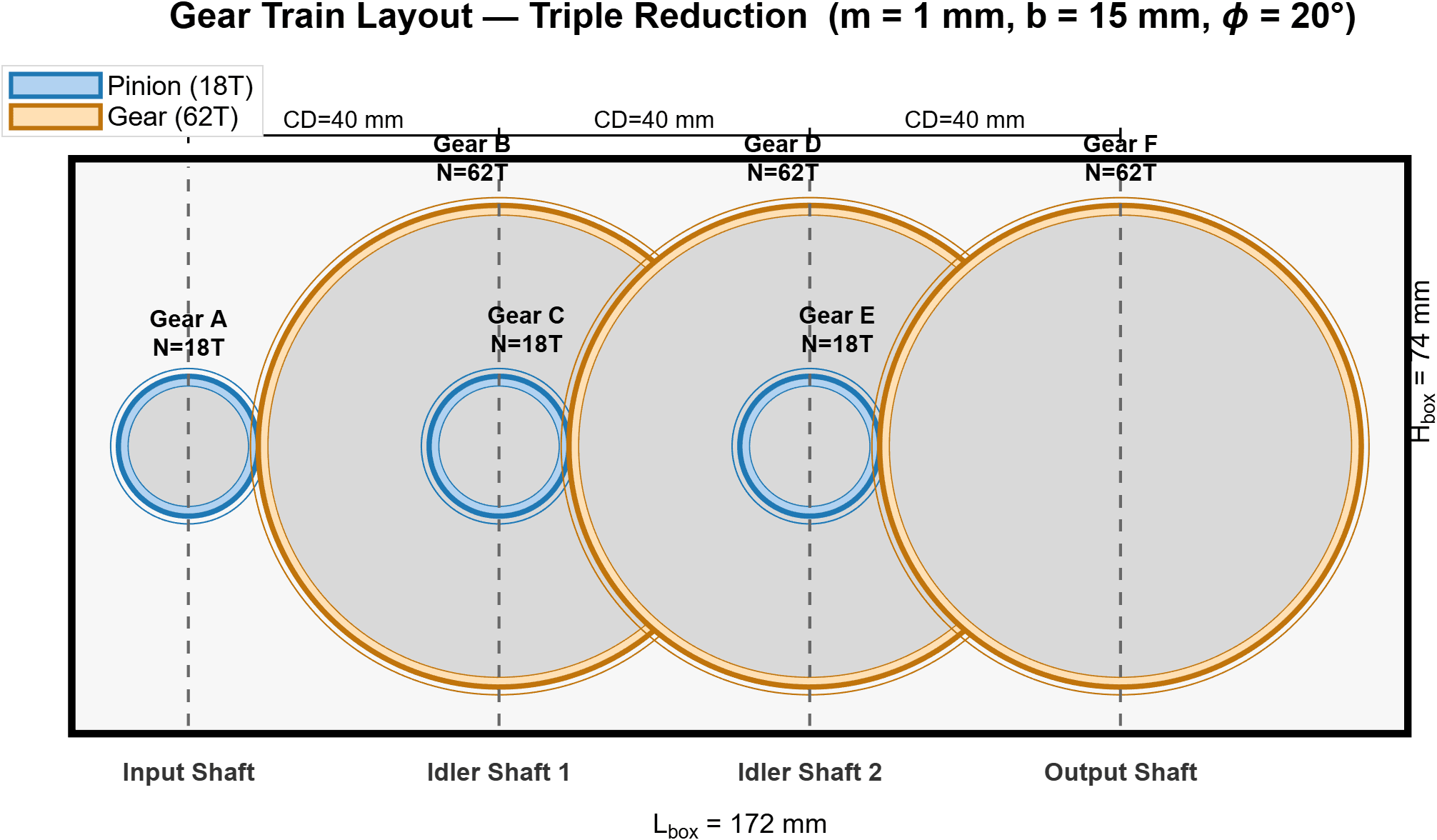
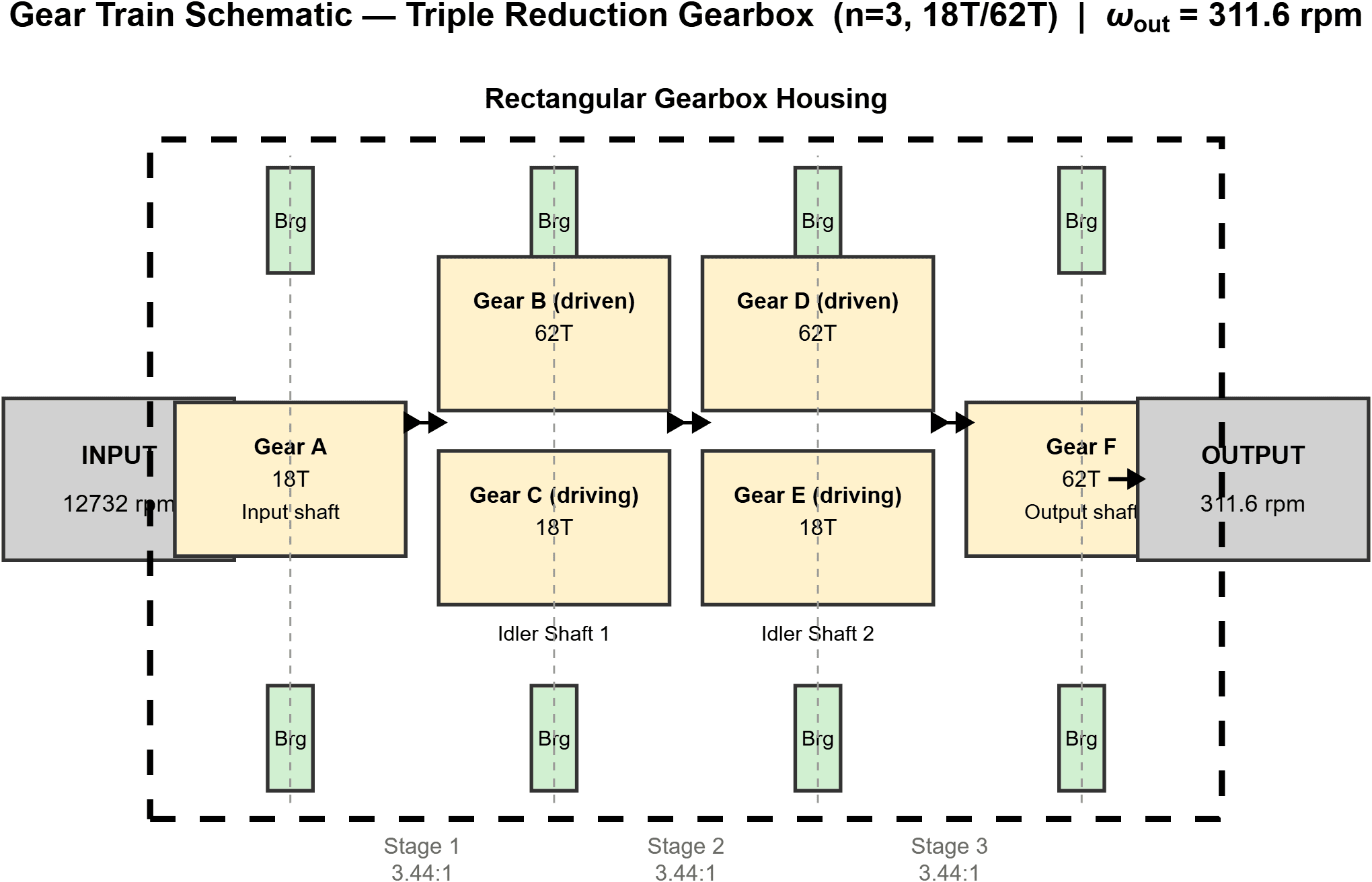
This project focused on the systematic design and stress analysis of a compact, multi-stage spur gear reduction system. A comprehensive methodology was developed, encompassing the derivation and extension of analytical form factors for gear teeth and a systematic design-space exploration. Using MATLAB, numerous gear train configurations were evaluated based on kinematic requirements, overall reduction ratio, and critical bending stresses. The Lewis equation, incorporating velocity factors, was employed to assess tooth root stresses, with particular attention to material property variability and the application of conservative safety margins. The study highlighted the trade-offs between stage count, gear ratios, and overall system volume, demonstrating an approach to optimize for compact packaging while maintaining robust factors of safety. This work underscores the application of analytical methods and computational tools for efficient mechanical system design and performance verification.
Results
Need a similar simulation?
Get a fixed-price quote within 24 hours.