Numerical Validation of Temperature Distribution in Friction Stir Welded Aluminum 7075-T651
This project involved a thermal simulation to predict temperature distribution during Friction Stir Welding (FSW) of Aluminum 7075-T651 plates. The simulation successfully validated maximum workpiece temperatures against published research, demonstrating high accuracy.
Project Overview
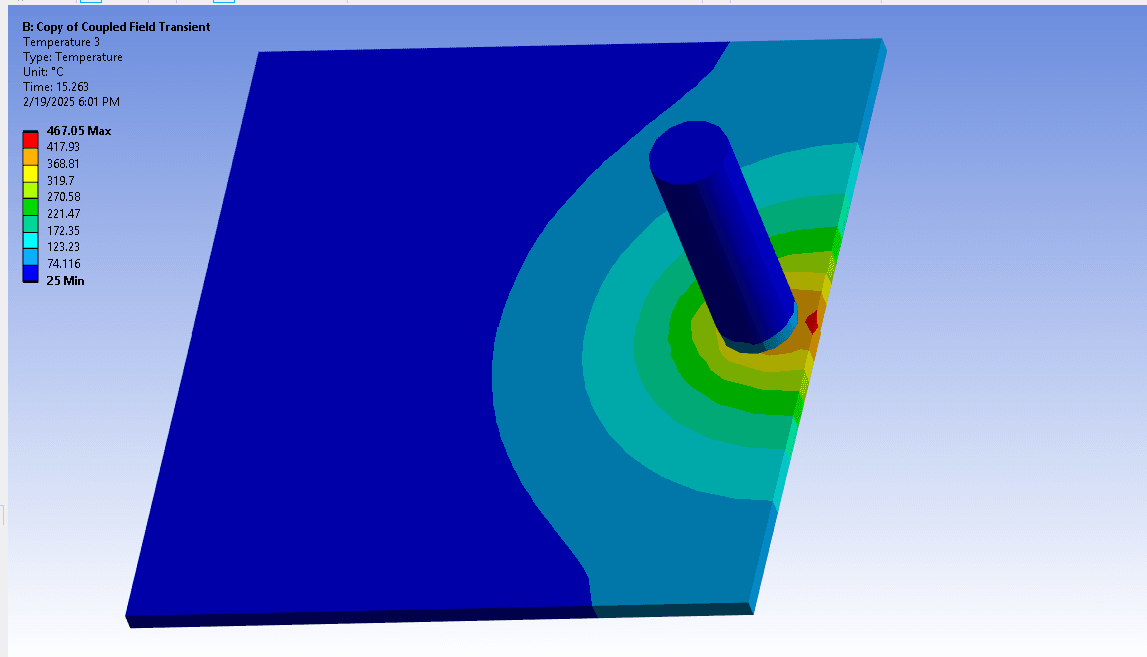
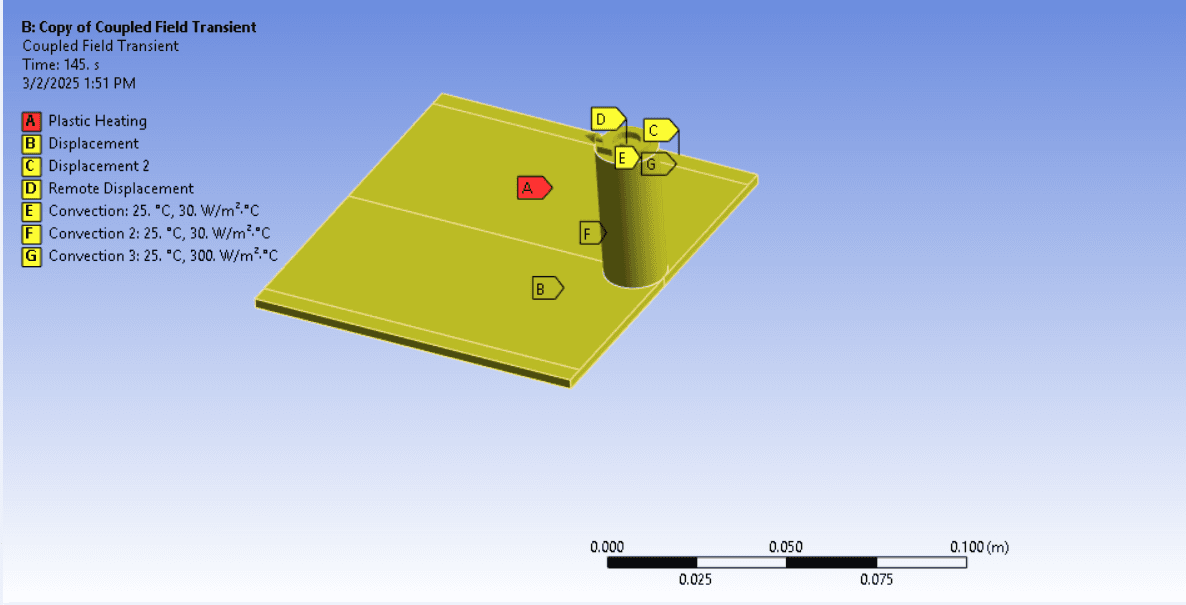
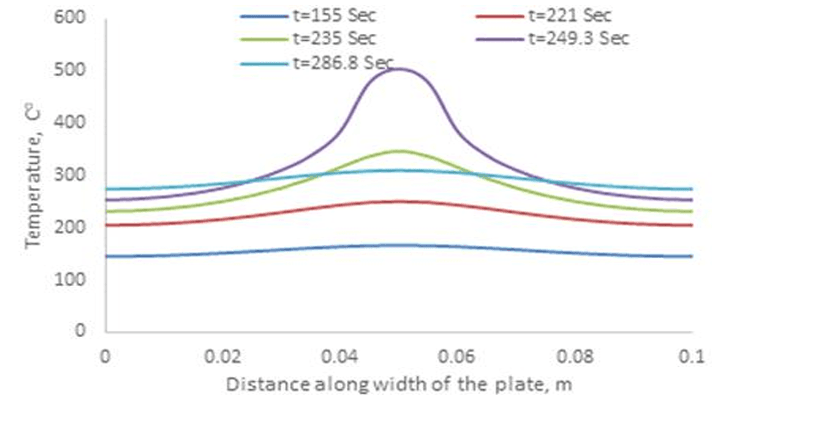
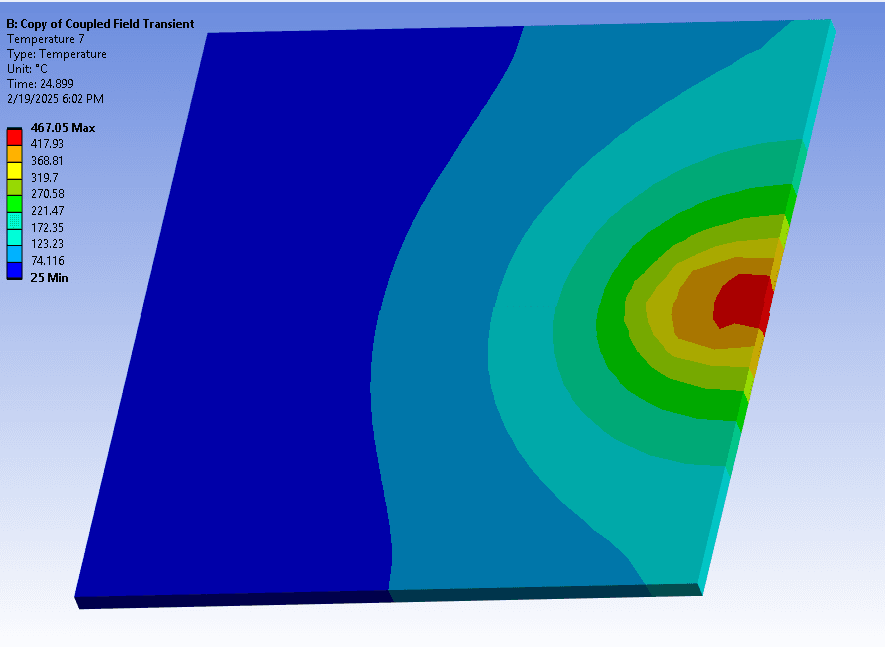
Friction Stir Welding (FSW) is a critical solid-state joining process, and accurately predicting its complex thermal profile is essential for optimizing weld quality and understanding material behavior, particularly for high-strength alloys like Aluminum 7075-T651. This project focused on developing and validating a transient thermal simulation to model the temperature distribution during FSW. The methodology incorporated detailed boundary conditions, including frictional heat generation at contact interfaces, plastic heating, and comprehensive convection models. Governing equations for thermal and mechanical equilibrium, coupled with Coulomb's Law for contact mechanics, were applied using specific tool and workpiece geometries and welding parameters (1500 rpm, 50mm/min feed speed). The simulation successfully predicted a maximum workpiece temperature of 467.05 Celsius. This result demonstrated strong agreement with published research, which reported a maximum of 490 Celsius, thus validating the model's capability to accurately capture the intricate thermal phenomena and heat flux within the FSW process.
Results

Need a similar simulation?
Get a fixed-price quote within 24 hours.